DDP vs DAP vs DPU: Key Differences Explained
When choosing an Incoterm for international shipping, understanding how responsibility transfers between buyer and seller is critical. This guide compares DDP vs DAP vs DPU side by side to help you select the right structure for your shipment.
TL;DR
- DAP requires the buyer to clear customs and unload the cargo.
- DPU requires the seller to unload, but the buyer pays duties.
- DDP shifts all transportation, customs, and tax costs to the seller.
- The right choice depends on each party’s risk appetite and import/export capabilities.

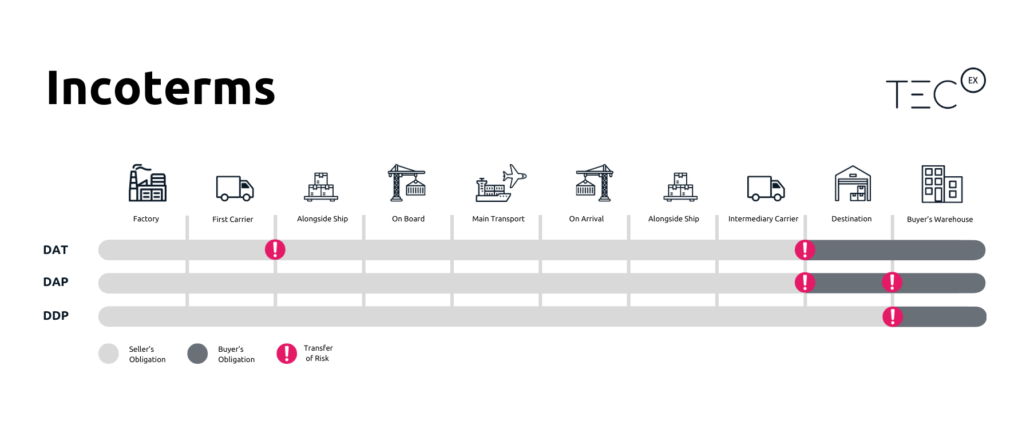
Three commonly used delivery-based Incoterms are DAP (Delivered at Place), DPU (Delivered at Place Unloaded), and DDP (Delivered Duty Paid).
Although these terms all involve delivery to a named destination, they differ in customs responsibility, tax exposure, and unloading obligations.
| Featured | DAP | DPU | DDP |
|---|---|---|---|
| Pays Import Duties | Buyer | Buyer | Seller |
| Handles Import Clearance | Buyer | Buyer | Seller |
| Unloading at Destination | Buyer | Seller | Buyer |
| Delivery Location | Named Place | Named Place (Unloaded) | Named Place |
| Seller Risk Level | Moderate | Moderate | Highest |
| Buyer Risk Level | Low to Moderate | Low | Lowest |
Three commonly used delivery-based Incoterms are DAP (Delivered at Place), DPU (Delivered at Place Unloaded), and DDP (Delivered Duty Paid).
Although these terms all involve delivery to a named destination, they differ in customs responsibility, tax exposure, and unloading obligations.
What Is DAP (Delivered at Place)?
Under DAP, the seller delivers goods to a named place of destination and bears risk until arrival.
DAP Incoterm Responsibilities:
The DAP Seller:
- Arranges transportation
- Covers freight costs
- Bears risk until goods reach the destination
The DAP Buyer:
- Handles import clearance
- Pays duties and VAT
- Unloads the goods
DAP is often chosen when the buyer has strong customs capability in the destination country and prefers to manage tax processes locally. With DAP, the seller is responsible for delivering the goods to a named destination, but they are not responsible for costs such as import taxes or duties. Neither are they responsible for unloading the goods.
So, the seller still has significant responsibility for the transportation and delivery of the cargo, but the buyer assumes more of the burden at the destination port, including customs clearance and handling the goods.
DAP shipping is widely considered cheaper for the seller than DDP shipping because the buyer assumes more financial responsibility until the risk transfers.
What Is DPU (Delivered at Place Unloaded)?
DPU (Delivered at Place Unloaded) replaced DAT under Incoterms 2020.
The defining feature of DPU is that the seller is responsible for unloading the goods at the named destination.
DPU Incoterm Responsibilities
The DPU Seller:
- Arranges transport
- Delivers goods
- Unloads at destination
The DPU Buyer:
- Handles import clearance
- Pays duties and taxes
DPU is commonly used when delivery occurs at a terminal, warehouse, or facility equipped to receive and unload cargo.
DPU is the only Incoterm that requires the seller to unload the goods at the destination. It is crucial to specify the exact, named unloading point to avoid disputes regarding risk and costs. Sellers take on maximum responsibility during the logistics process. As DPU gives the seller control over the transportation and unloading process, it can help optimize logistics processes and save costs.
For buyers, DPU shipping is also beneficial as they have minimal responsibility during the transportation process. This means they don’t need to worry about loss or damage to goods until the seller has delivered and unloaded the shipment. The DPU buyer is only responsible for import duties and taxes and for accepting delivery at the destination.
What Is DDP (Delivered Duty Paid)?
Under DDP, the seller assumes responsibility for both delivery and import clearance.
DDP Responsibilities
The DDP Seller:
- Handles customs formalities
- Pays duties and VAT
- Delivers goods ready for unloading
The DDP Buyer:
The buyer’s obligations are minimal at delivery.
Because DDP includes import tax responsibility, it places the highest obligation on the seller.
For a detailed breakdown of DDP responsibilities and risks, see our complete DDP shipping guide.
Core Differences Between DAP, DPU, and DDP
| Responsbility | DAP | DPU | DDP |
|---|---|---|---|
| Import Duties & VAT | Buyer | Buyer | Seller |
| Customs Clearance | Buyer | Buyer | Seller |
| Unloading | Buyer | Seller | Buyer |
When Should You Use Each Incoterm?
When deciding which Incoterm to use, the right choice depends largely on how responsibilities for logistics, customs, and risk are allocated between the buyer and seller.
When DAP Makes Sense
DAP (Delivered at Place) makes sense when the buyer has strong local customs expertise and prefers to control duty payments directly. It is also a good option when the seller wants to avoid tax registration exposure in the destination country. DAP is commonly used when delivery is made to a warehouse or global office, allowing the seller to manage transportation while the buyer handles import clearance.
Overall, DAP provides a balanced structure in which the seller controls the main logistics process, and the buyer manages the import formalities.
When DPU Is Appropriate
DPU (Delivered at Place Unloaded) is appropriate when delivery includes unloading at a terminal or designated facility. It is particularly useful in situations where the seller must handle unloading or when the shipment requires specialized handling equipment. At the same time, the buyer may still prefer to manage customs clearance independently.
DPU works especially well for structured, terminal-based deliveries where unloading responsibilities need to be clearly defined.
When DDP Is Applicable
DDP (Delivered Duty Paid) is best suited for transactions in which the buyer wants a fully inclusive delivery model with minimal administrative involvement. It works well when the seller is equipped to manage import compliance and when the shipment requires centralized customs coordination.
While DDP simplifies the purchasing experience for the buyer, it also places the greatest level of responsibility and risk on the seller
Risk and Administrative Comparison
| Consideration | DAP | DPU | DDP |
|---|---|---|---|
| Seller Tax Exposure | Low | Low | High |
| Buyer Customs Involvement | High | High | Low |
| Seller Compliance Burden | Moderate | Moderate | High |
| Operational Complexity | Moderate | Moderate | Higher |
Selecting the correct Incoterm depends on how much compliance and financial responsibility each party is prepared to assume.
Choosing the Right Structure for Your Shipment
DDP, DAP, and DPU are all delivery-based Incoterms, but they allocate customs responsibility differently.
- Choose DAP when the buyer manages import clearance.
- Choose DPU when unloading must be handled by the seller.
- Choose DDP when the seller manages the full import process.
If your shipment requires end-to-end import clearance support, explore our complete DDP guide for a deeper operational breakdown.
Hassle-Free Trade Compliance Solutions
As you can see from our wealth of knowledge, TecEx is your go-to partner for global trade management. With our trade compliance solutions, your IT supply chain will operate without hitting any roadblocks. We help you meet compliance requirements, navigate sanction changes, take advantage of free trade agreements, and more.
See the TecEx difference today.