.jpg)
Asia
Lane is Available
Importing to Brazil
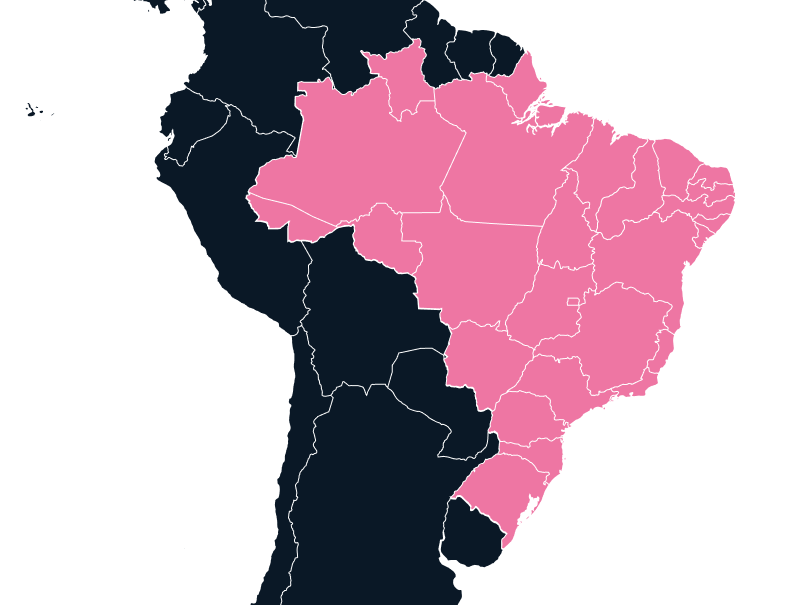
Brazil is the largest economy in South America, and is becoming a preferred destination for importing tech hardware as it offers a booming tech industry and colocation facilities. However, Brazil has one of the most complex customs systems, with a notoriously intricate tax system, and the required compliance documentation for imports and exports varies significantly by type of goods being imported.
Tax
Up to 100%

Duties
Up to 35%

Lead Times
6-7 weeks

Restricted Items
Second-Hand Goods

Best Carrier Option
Freight Forwarder

Non-Working Days
Saturday, Sunday, and Public Holidays

Prominent Languages
Portuguese
Navigate Brazil’s Trade Landscape
Customs in Brazil is managed by the Receita Federal (formerly known as the Secretaria da Receita Federal do Brasil, or RFB) and operates alongside the country’s official digital trade system, known as SISCOMEX (Foreign Trade Integrated System).
Receita Federal manages import duties, border control, and trade compliance, while SISCOMEX is an electronic platform for all Brazilian cross-border trade that is required for all import and export declarations.
Importing into Brazil is notoriously difficult. One significant challenge faced by importers and exporters is dealing with the excess of documents, costs, and bureaucratic processes involved in customs clearance. Brazil also closely scrutinizes commercial transactions and related-party transactions.
In addition, Brazil has a complex customs valuation system to prevent undervaluation and ensure accurate tax collection. Import duties are calculated on the CIF (Cost, Insurance, and Freight) value, making Incoterms a critical factor when importing into Brazil. Receita Federal authorities can impose fines of up to 200% of the value of imported goods for customs violations.
Population
216,4 m
Biggest Industry by Export
Raw Materials
Capital City
Brasília
Biggest Industry by Import
Refined Petroleum
Did You Know?
Brazilians coined the term “Custo Brasil,” meaning “Brazil Cost,” in the 90s. This refers to the significant additional expenses and delays caused by heavy taxes, complex red tape, and poor transport systems when importing goods into Brazil. When working with an experienced Importer of Record (IOR) in Brazil, these challenges do not need to be navigated alone. TecEx, a trusted IOR Brazil, has long-term experience and expert teams managing imports into Brazil.
Importer of Record Brazil
When importing to Brazil, businesses must have a locally registered importer (typically the designated IOR) to handle the customs process. Foreign entities are almost always rejected outright when importing directly without a legal presence in the country. Brazil has several requirements for importers wanting to bring goods, especially tech and dual-use items, into the country, such as:
Mandatory Registration
Any entity acting as an importer must be registered with the Foreign Trade Secretariat (SECEX) and the SISCOMEX.
As with imports, all exports are also registered through the SISCOMEX system. Without this registration, goods cannot be exported from or imported into Brazil.
In-Country Presence
For highly regulated goods, such as medical devices or high-value tech goods, foreign companies must establish a local Brazilian office/manufacturing unit or appoint an authorized Brazilian entity to act as the importer to clear customs successfully.
Tax Benefit Eligibility
Brazil has various cost-saving regimes, such as Ex-Tarifário, which unlocks temporary import tax reduction. However, applications for this benefit must be made to the Secretary of Production Development by a Brazilian company or an entity established in Brazil.
TecEx can assist you with navigating Brazil’s complex tax structures.
Brazil’s strict import regulations also require importers to obtain a Nota Fiscal. This legal document is used in Brazil to ensure trade compliance and record commercial transactions. Hence, it serves as a record of goods and a measure of tax compliance, affirming that all businesses importing into Brazil comply with the tax legislation.
The Nota Fiscal also serves other functions, such as monitoring economic data, enabling transparent relations, and tracking the origin and quality of goods. Obtaining this document requires an in-depth understanding of Brazilian laws, which are complex and time-consuming. Without an IOR holding a local CNPJ to issue the Nota Fiscal, your goods cannot legally move from the port of entry to the end destination.
Related Party Risks in Brazil
Brazil has introduced strict new OECD-aligned transfer pricing rules that require exhaustive documentation for all intercompany technology transfers. Accurate customs valuation and correctly structured transactions are crucial for seamless customs clearance.
How an IOR Brazil Assists with Regulations
Working with an experienced Importer of Record Brazil is strongly advised to navigate regulatory requirements, obtain the required licenses for the correct items, and navigate complex trade barriers. An IOR Brazil can assist with navigating exports and imports in several ways:
Correct Classification
An IOR ensures products are assigned the correct NCM (Mercosur Common Nomenclature) code. The NCM is consistent with the international Harmonized System (HS) for classifying goods and determining their tax treatment. Misclassification is a common pitfall that leads to severe fines, penalties, or the seizure of shipments.
Documentation Consistency
Minor errors in paperwork often result in high fees and shipment delays. TecEx has compliance specialists who manage the organization and filing of documents, such as the Bill of Lading, Proof of Origin, Commercial Invoice, and other required customs compliance documentation to ensure they match the data entered in SISCOMEX.
Obtaining Licenses
Many item categories require an Import License (IL) before shipping, especially for tech goods. When it comes to import and export licensing in Brazil, the importer needs a Company Tax Registry (CNPJ) and an active RADAR license to clear customs.
RADAR stands for “Registro e Rastreamento de Atuação dos Intervenientes Aduaneiros”. The RADAR license is a mandatory authorization issued by Receita Federal for companies importing or exporting goods into Brazil; without one, trade is not possible in Brazil. The RADAR license helps the Brazilian tax authority monitor foreign trade activities, assess importers’ financial capacity, and reduce customs fraud and tax evasion.
Exporting from Brazil also requires navigating complex regulations, including obtaining export licenses. An IOR Brazil can coordinate with the multiple regulatory agencies (such as ANVISA or IBAMA) to secure approvals for all needed permits and licenses.
Pain Points for Importing to Brazil
Importing and exporting tech gear from Brazil is complex. Numerous challenges exist, from high tariff rates and changes in the cascading tax system to various compliance and certification requirements, such as ANATEL.
ANATEL
ANATEL certification is required for any telecommunication equipment and is needed to clear Brazilian customs. ANATEL approval must be obtained prior to shipping and filing the import declaration. Shipping hardware before obtaining the certificate leads to immediate customs seizure and severe RFB penalties.
Tax Frameworks
The most notable pain point in Brazil is its complex tax framework, featuring cascading taxes such as II, IPI, PIS/COFINS, and ICMS. The country is currently undergoing a constitutional amendment to the current system, called “Brazil’s Tax Reform (PEC 45/2019)”. This reform aims to simplify the tax system by replacing multiple indirect taxes with a dual VAT system, which will be implemented in phases from 2026 to 2033. Navigating these evolving tax changes requires niche trade compliance expertise.
DUIMP
Brazil is not only changing its tax structures but is also transitioning to digitized processing with a system called DUIMP (Declaração Única de Importação), another pain point that importers need to adapt to. DUIMP is a more centralized digital system for import declarations, which replaces older forms. Under this new system, all compliance data, including invoices and licenses, is submitted through the Portal Único de Comércio Exterior (Single Foreign Trade Portal) to streamline approvals by various regulatory agencies, such as ANVISA.
Second-Hand Goods
Another pain point for tech importers is that importing used and second-hand IT equipment and telecom hardware is strictly prohibited by default in Brazil. Exceptions require formal certificates, such as an “Atestado de Inexistência de Produção Nacional” document issued by ABIMAPI/ABINEE, proving that there is no equivalent product manufactured locally in Brazil.
Challenges such as port inefficiencies, fluctuating currency rates, and logistical hurdles further complicate the import and export process. Importers and exporters need to navigate bureaucratic red tape, be aware of intellectual property regulations, and ensure compliance with international trade and compliance standards.
Importing Data Centers to Brazil?
Despite the complexity of Brazilian customs authorities, several large IT companies have made this country their regional headquarters, with many data center giants based here. Data centers play a pivotal role in the tech boom across Latin America, serving as a fundamental component of digital infrastructure.
Brazil’s data center market is expected to continue its rapid growth, driven by cloud adoption, digital transformation, and supportive government policies. However, addressing regulatory, infrastructure, and economic challenges will be essential for sustained expansion.
ReData, a proposed special tax framework designed by the Brazilian government, is being introduced to encourage local investment in the data center industry. Its main purpose is to improve tax efficiency (offering up to $7 billion in tax exemptions) and lower the high costs associated with establishing, expanding, or building data centers within the country.
While ReData offers a pathway to reduce high capital expenditures, it currently faces legislative delays due to debates over regional scope and sustainability requirements, leaving it at an impasse. If you would like to learn more about data centers in Brazil and the impact of ReData, you can learn more here.
TecEx, an essential partner for managing complex IOR Brazil services and customs documentation, provides a compliant pathway for importing technology products into Brazil’s evolving regulatory environment. With our Data Center Solution, we facilitate seamless data center deployments worldwide. We assume full import/export responsibility and offer 110% Liability Cover for extra protection.
Specialized Solutions for Your Brazil Imports | The TecEx Advantage
Foreign OEMs, Cloud Providers, and System Integrators rarely maintain an active Brazilian entity with an RADAR license. Applying for one can take 3 to 6 months of financial auditing by the Receita Federal.
When it comes to US-Brazil trade, potential tariffs and trade tensions stemming from America’s tariff war must be considered for exports to America. If you want to stay up to date on the current rates, visit our tariff tracker here.
Have a shipment blocked by RADAR limits?
With TecEx as your IOR, you unlock seamless market entry. Use our established RADAR license with no local entity setup required on your end. With us, you have full SISCOMEX, DUIMP, and customs compliance management. We execute your declarations and secure mandatory permits and licenses before cargo dispatch.
Brazil and Trade Agreements
Brazil is a member of several trade agreements, most notably Mercosur, the largest trade bloc in Latin America. This bloc includes Brazil, Argentina, Paraguay, and Uruguay, and its purpose is to reduce tariff trade barriers.
Shipping to Brazil doesn’t need to be complicated. As one of our most popular destinations, you can rest assured that TecEx’s tried-and-tested process is the most reliable and efficient solution. TecEx will ensure all necessary compliance is in place by conducting rigorous pre-compliance checks, so your goods sail through customs.
Countries That Trade with Brazil
North America
United States of America (USA)
South America
Argentina
Your Global Trade Solution for Importing to Brazil
Our team has extensive expertise with customs compliance solutions and can create a tailored plan for your shipment needs. Fill out the form to get in touch with TecEx, navigate Brazil’s complex regulations, and get a bespoke solution.