Incoterms play a critical role in global shipping. They define how responsibility, cost, and risk are shared between buyers and sellers when goods are imported or exported. Choosing the right Incoterm helps prevent disputes, delays, and unexpected costs throughout the shipping process.
This guide explains what Incoterms are, how they affect international shipping responsibilities, and how to apply Incoterms 2020 correctly in trade contracts.
Important: Incoterms are updated every 10 years by the International Chamber of Commerce (ICC). Incoterms 2020 are the current standard and should be referenced in all new international trade agreements.
What are Incoterms?
Incoterms (International Commercial Terms) are standardized international shipping terms used in contracts for the sale of goods. They establish clear rules that define the responsibilities of buyers and sellers at each stage of the shipping journey.
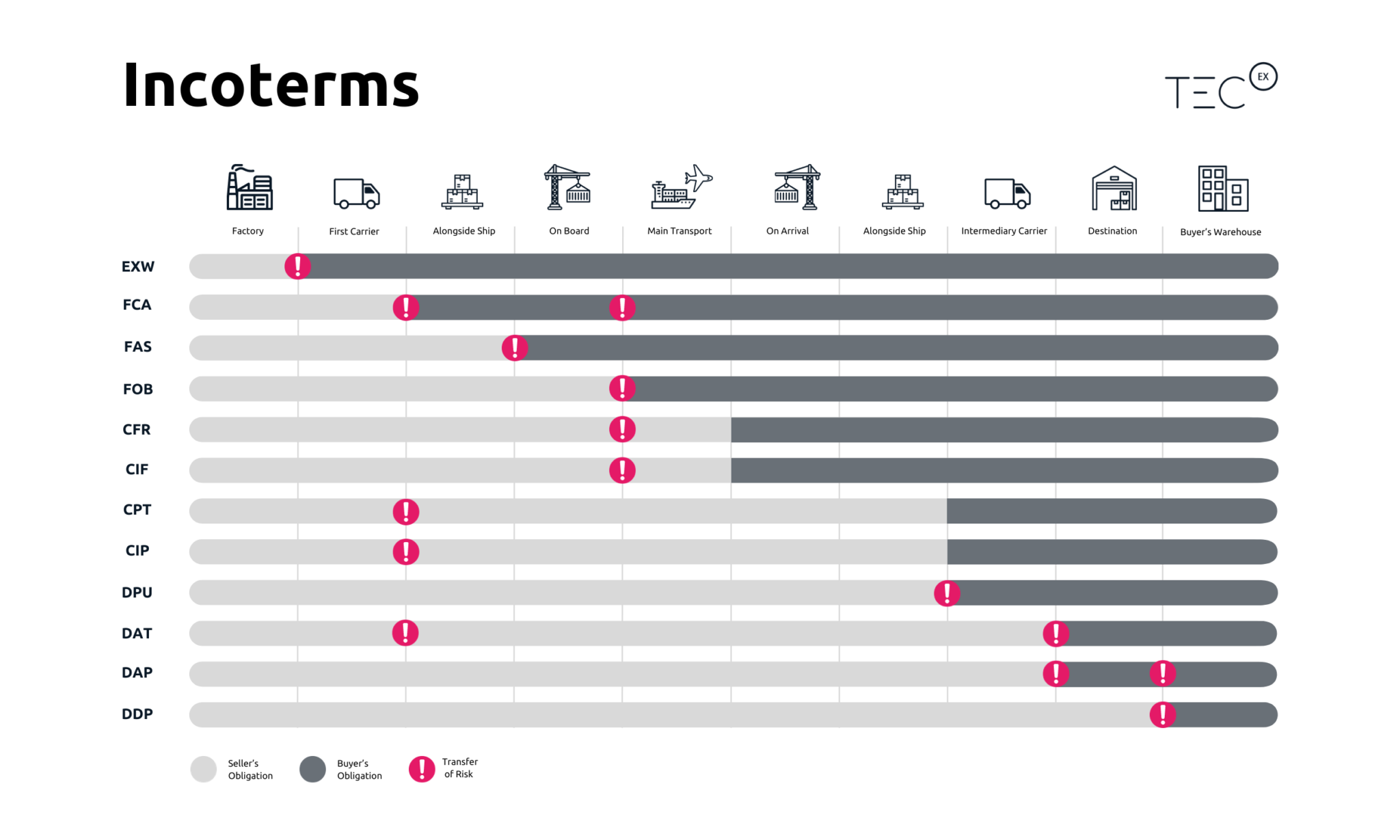
There are 11 Incoterms in total. Each Incoterm sets out who is responsible for transportation, costs, documentation, insurance, and risk at specific points in the transaction. By using Incoterms, trading partners create a shared understanding of their obligations, regardless of country or legal system.
Incoterms are widely used in purchase orders, sales contracts, and shipping documentation, and when included correctly, they are legally binding.
The Key Responsibilities Incoterms Define
Incoterms clarify responsibility for:
Understanding these elements is essential to managing risk and cost in international shipping.
Incoterms for Any Mode of Transport
The following Incoterms can be used for road, rail, air, sea, or multimodal transport:
EXW – Ex Works
The seller makes the goods available at their premises. The buyer assumes all costs, risks, and responsibility from that point onward. Read more about Ex Works here.
FCA – Free Carrier
The seller delivers the goods to a named carrier. Risk transfers to the buyer once the carrier takes possession.
CPT – Carriage Paid To
The seller pays for transportation to the named destination, but risk transfers when goods are handed to the first carrier.
CIP – Carriage and Insurance Paid To
Similar to CPT, but the seller also provides insurance. Risk still transfers at delivery to the first carrier.
DAP – Delivered at Place
The seller delivers the goods to an agreed location, ready for unloading. The buyer handles import clearance and duties.
DPU – Delivered at Place Unloaded
The seller delivers and unloads the goods at the named place. The buyer is responsible for import customs clearance and duties.
DDP – Delivered Duty Paid
The seller assumes full responsibility, including transport, customs clearance, and import duties, delivering goods ready for unloading at the destination.
Incoterms for Sea Freight Only
These Incoterms apply exclusively to sea and inland waterway transport:
FAS – Free Alongside Ship
The seller delivers goods alongside the vessel at the port of shipment. Risk transfers at that point.
FOB – Free On Board
The seller is responsible until goods are loaded on board the vessel. Risk transfers once loading is complete.
CFR – Cost and Freight
The seller pays for sea freight to the destination port, but risk transfers once goods are on board the ship.
CIF – Cost, Insurance and Freight
The seller pays for freight and insurance, but risk still transfers when goods are loaded onto the vessel.
Risk Transfer Under Incoterms
One of the most important functions of Incoterms is defining when risk transfers from seller to buyer. Risk transfer defines the exact point at which responsibility for loss or damage to the goods changes hands. This transfer does not always align with who pays for transportation or insurance.
For example, under CPT and CIP, the seller pays for carriage to the destination, but risk transfers much earlier—when goods are handed to the first carrier. Misunderstanding this distinction can result in uninsured losses or disputes, making it essential that Incoterms are clearly stated in contracts and supported by appropriate liability coverage.
Incoterms and Domestic Trade
While Incoterms are primarily designed for international trade, they can also be used in domestic shipping contracts. In domestic movements, Incoterms help standardize delivery terms, clarify responsibility between parties, and reduce ambiguity in logistics arrangements—particularly where third-party carriers or warehouses are involved.
In domestic supply chains, Incoterms can improve transparency around cost allocation, delivery points, and risk transfer, supporting smoother operations and stronger commercial relationships, even where customs formalities are not required.
Curious about the impact of Incoterms on domestic trade?
Incoterms FAQs
What Do Incoterms Not Cover?
Incoterms define shipping responsibilities, but they do not govern every aspect of a sale. They do not:
- Identify the goods being sold
- Set the contract price
- Define payment terms or timing
- Determine when ownership transfers
- List required customs documents
- Address penalties for late or defective goods
- Provide dispute resolution procedures
These elements must be covered separately in the sales contract.
Which Incoterm Should I Use?
The right Incoterm depends on factors such as:
- Risk tolerance of buyer and seller
- Experience with customs procedures
- Control over transportation and insurance
- Cost efficiency
- Relationships with freight forwarders, insurers, or customs brokers
In most cases, selecting an Incoterm is a negotiated decision based on commercial strategy and operational capability.
Where Can I Find More Information About Incoterms 2020?
We provide expert support for import and export shipments, including a fully managed Delivered Duty Paid (DDP) shipping solution that transfers all risk and responsibility to us.
Detailed guidance is also available on the ICC website.
When Will Incoterms 2020 Be Revised?
Incoterms are updated every 10 years. The current version, Incoterms 2020, will remain in effect until the next scheduled revision in 2030.
Choose the Correct Incoterm for Your Goods
Choosing the correct Incoterm is essential to controlling cost, managing risk, and ensuring smooth delivery in international tech shipping. When applied correctly, Incoterms reduce uncertainty, protect commercial relationships, and create a shared framework that all parties understand.
Our specialized Delivered Duty Paid (DDP) shipping solution removes complexity from international shipping by managing transportation, customs clearance, duties, and final delivery on your behalf. By transferring all risk and responsibility to us, you gain a predictable, compliant, and fully managed shipping process, allowing you to focus on growing your business with confidence.