Leveraging Trade Blocs for Tech Imports
A trade bloc is a group of countries that reduces barriers to trade between themselves. Trade blocs include free trade areas, customs unions, common markets, economic unions, and political unions. Intra-bloc trade among geographically close countries can lead to lower costs, expanded export potential, regional growth, and economies of scale. However, stringent compliance requirements for both members and non-members, such as rules of origin, can make trade tricky to navigate.
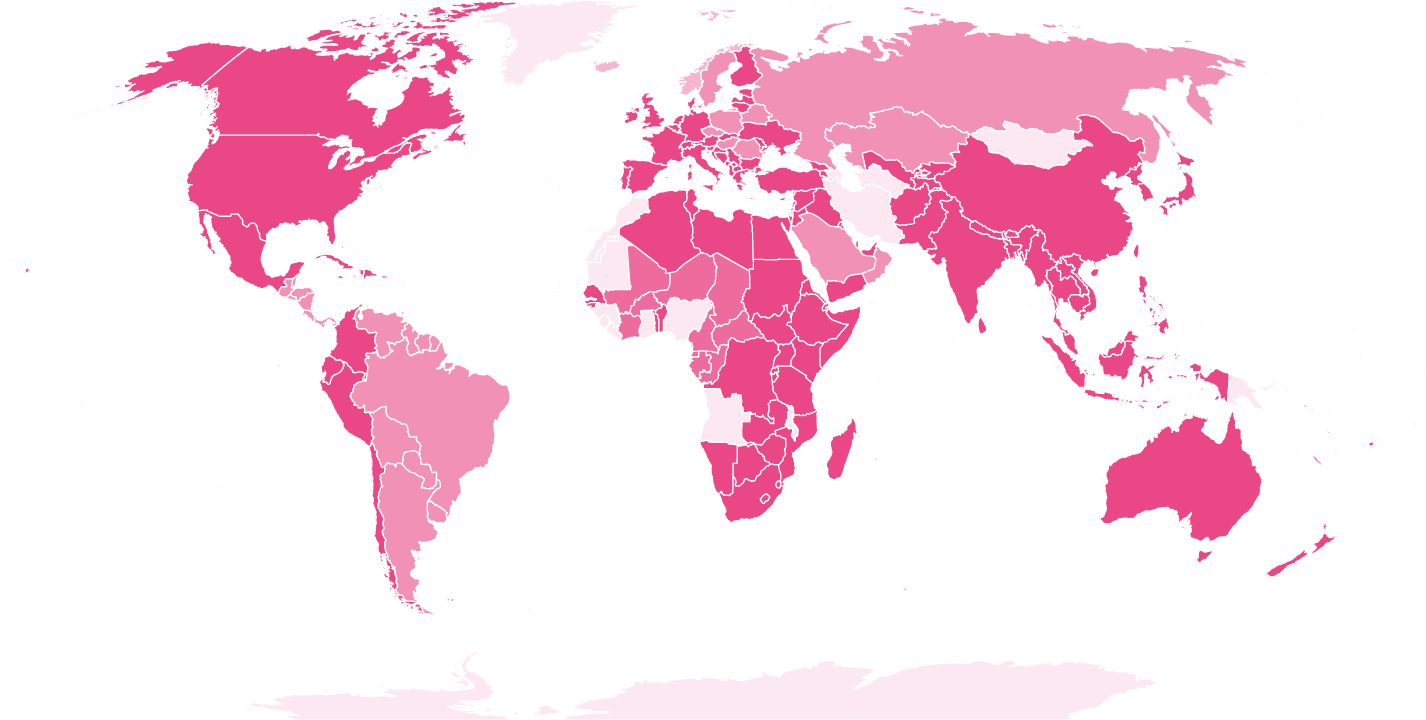
Over ⅓ of world trade is facilitated within trade blocs
RCEP drives 30% of global GDP
30% of global exports are from the EU
50% of global trade is driven by ASEAN, the EU, and the USMCA
Six trade blocs drive 60% of global imports & exports
How Trade Blocs Affect Tech Trade
When digital and technological protectionism is on the rise through measures like Digital Service Taxes (DST), data sovereignty policies, export controls on advanced technologies, and complex import regulations on dual-use goods, AI gear, and data center infrastructure, trade blocs play a crucial role in lifting tariff and non-tariff barriers to tech trade.
For tech companies, intra-bloc trade often means freer data flows, faster cross-border movement of hardware, and shared import standards. Non-members may face higher duties, data localization mandates, and complex licensing requirements. For both scenarios, an expert trade compliance partner ensures shipments comply with bloc rules and country-specific regulations.
What Are the Challenges of Trade Blocs?
Major Trade Blocs
ASEAN and AFTA
The Association of Southeast Asian Nations (ASEAN) is a trade bloc of 11 Southeast Asian countries: Brunei, Cambodia, Indonesia, Laos, Malaysia, Myanmar, the Philippines, Singapore, Thailand, Timor-Leste, and Vietnam. In 2024, intra-bloc trade accounted for 19.6% of ASEAN’s total trade. The ASEAN Free Trade Area (AFTA) enhances the bloc by lowering trade barriers and improving cross-border efficiency.
Positioned between Asia’s manufacturing giants and data center hubs, ASEAN is expanding its role in electronic manufacturing and semiconductor supply chains, with DRAM and NAND solutions driving much of the bloc’s market revenue. By 2035, ASEAN’s semiconductor market is projected to reach $62.87 billion at a 5.98% CAGR. Given the region’s import complexities, both members and non-members benefit from third-party DDP services.
CPTPP
The Comprehensive and Progressive Agreement for Trans-Pacific Partnership (CPTPP) is a mega-regional trade bloc consisting of Australia, Brunei, Canada, Chile, Japan, Malaysia, Mexico, New Zealand, Peru, Singapore, Vietnam, and, more recently, the United Kingdom. It accounts for 14.4% of global GDP.
Beyond lowering trade costs, the CPTPP aims to support fairer, more sustainable economic growth. With fewer trade barriers, digital trade and data flow are simplified. Data localization requirements are banned among members, as the CPTPP provides a framework for data protection. Zero tariffs and fewer barriers also mean easier movement of AI and data center gear. However, import regulations differ significantly across CPTPP members, making it crucial to work with a trade compliance and DDP partner.
The EU and the EEA
The European Union (EU) is a political and economic bloc of 27 members, and the European Economic Area (EEA) is a single market between the EU and Iceland, Liechtenstein, and Norway. In 2024, the EU exported $525 billion in AI-enabled services, while high-tech products made up 20% of extra-EU imports and 19% of extra-EU exports.
The EEA offers major opportunities for colocation, data centers, and exports. However, logistical and climate challenges make it crucial to work with a DDP service provider when expanding to these countries. Non-EU members face high VAT rates in the EU and need an expert provider to ensure efficient transactions and import structuring to achieve cost savings.
GCC
The Gulf Cooperation Council consists of six countries within the Arabian Peninsula in the Middle East: Bahrain, Kuwait, Oman, Qatar, Saudi Arabia, and the UAE. Modern ports make the GCC an ideal regional distribution hub, and the GCC Integrated Customs Tariff ensures customs integration among member countries, simplifying procedures.
The GCC has a high level of digital maturity, with impressive telecommunications infrastructure and growing data center infrastructure, particularly in the UAE and Saudi Arabia. However, tech hardware imports must comply with stringent regulations and obtain country-specific permits despite the integrated customs system.
Mercosur
The Southern Common Market, or Mercosur, is a South American economic and political bloc and customs union comprising Argentina, Bolivia, Brazil, Paraguay, and Uruguay, plus 7 associate states. The Bolivarian Republic of Venezuela is currently suspended as a member.
Mercosur members have rapidly transformed into digital leaders in the LATAM region, but also offer critical minerals for battery manufacturing, as well as green energy. Green-shoring is an emerging trend in the region as data centers look for sustainable power sources. The more recent EU-Mercosur agreement unlocks tariff reductions on hardware such as semiconductors, cloud infrastructure, and telecommunications equipment. However, bureaucratic customs processes, shipping risks, complex logistics, currency fluctuations, and high VAT make an expert IOR crucial for seamless Mercosur trade.
RCEP
The Regional Comprehensive Economic Partnership (RCEP) is the world’s largest trade bloc, containing 30% of the global economy and 2.3 billion people. It joins ASEAN with Australia, China, Japan, New Zealand, and South Korea. The bloc supports integrated and advanced intra-regional supply chains, known as “Factory Asia,” which account for almost 60% of world trade.
RCEP aims to eliminate 92% of tariffs over time, including semiconductors, photovoltaic cells, electric accumulators, transformers, capacitors, and batteries. 50% of global manufacturing output originates from RCEP. Electronic, mechanical, and transportation equipment make up 40% of intra-bloc trade volume. The AI supercycle has propelled RCEP into AI infrastructure and semiconductor manufacturing. Rules of origin, Certificates of Origin, and routing expertise are crucial for seamless and compliant imports, exports, and transshipments across RCEP.
AfCFTA
The African Continental Free Trade Area (AfCFTA) creates a single market across 54 African countries and 1.3 billion people, with a combined GDP of over $3 trillion. Africa’s digital economy is estimated to reach up to $712 billion by 2050. AfCFTA’s Digital Trade Protocol was introduced in 2024 to harmonize digital trade rules and open cross-border markets. By improving market conditions and competitiveness, the bloc aims to increase imports of higher-technology goods.
Despite the bloc’s broad reach, each country runs its own customs regime, meaning hardware faces varying regulations across the AfCFTA. A DDP and IOR service provider with country-specific expertise is crucial for ensuring the compliant movement of tech across the bloc.
USMCA
The United States-Mexico-Canada Agreement is a modernization of NAFTA, governing one of the world’s most integrated manufacturing regions. In 2024, ~83% of Mexico’s exports and ~76% of Canada’s exports went to the US. A third of US exports went to Mexico and Canada. The agreement streamlines customs processes, boosts digital trade, and simplifies data flow. As North America is leading the AI boom, the USMCA is crucial for semiconductors and data center hardware.
With the USMCA under review in 2026, USMCA-compliant goods have not been entirely shielded from America’s tariff regime. AI, data center gear, and IT hardware moving across these countries must be accompanied by accurate HS codes and COO documentation, as well as efficient, compliant tariff risk mitigation. A trade compliance and DDP partner is essential for USMCA trade.
Import to Trade Blocs
TecEx offers trade compliance, optimized routing, and end-to-end deployment solutions for both members and non-members of trade blocs. Get in touch for tailored solutions to unlock the benefits you qualify for.