Free Download
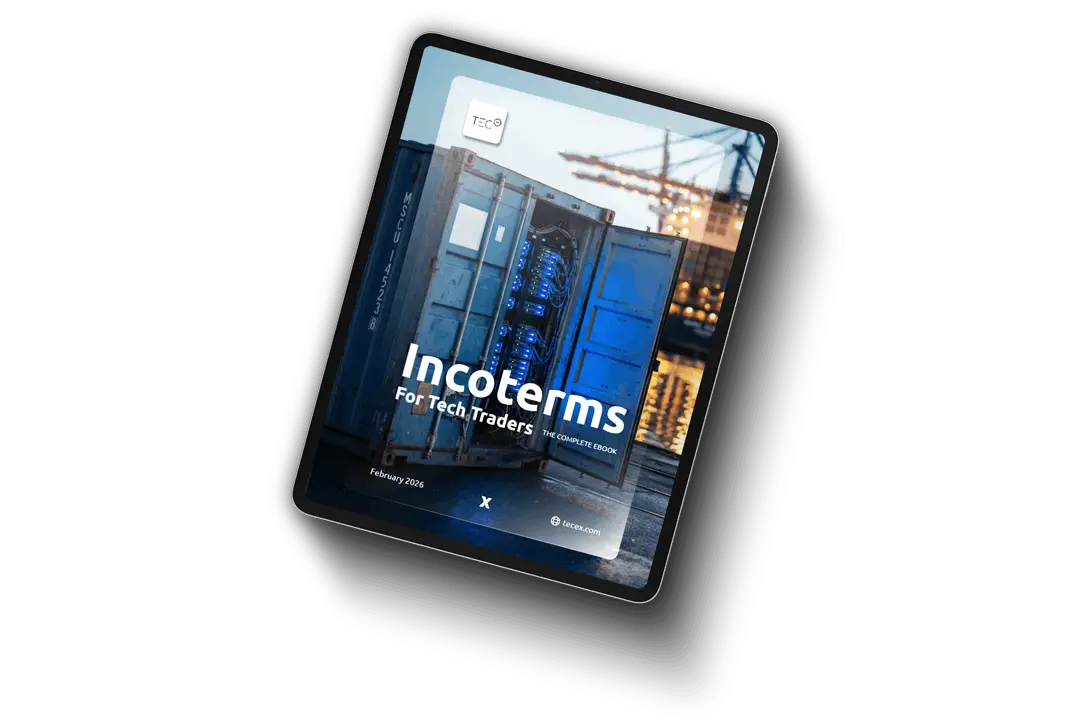
Incoterms for Tech Traders
67% of people in the tech industry don’t understand Incoterms, the universal language that defines shipping responsibilities and the risks that each party is exposed to.
Our latest eBook breaks down:
- What each Incoterm means and how to choose the right one.
- Common Incoterm pain points and solutions for tech shipments.
- How a DDP and compliance service provider minimizes risks.
- Incoterm use cases for tech products.
Submit This Form To Get the eBook
What Are Incoterms?
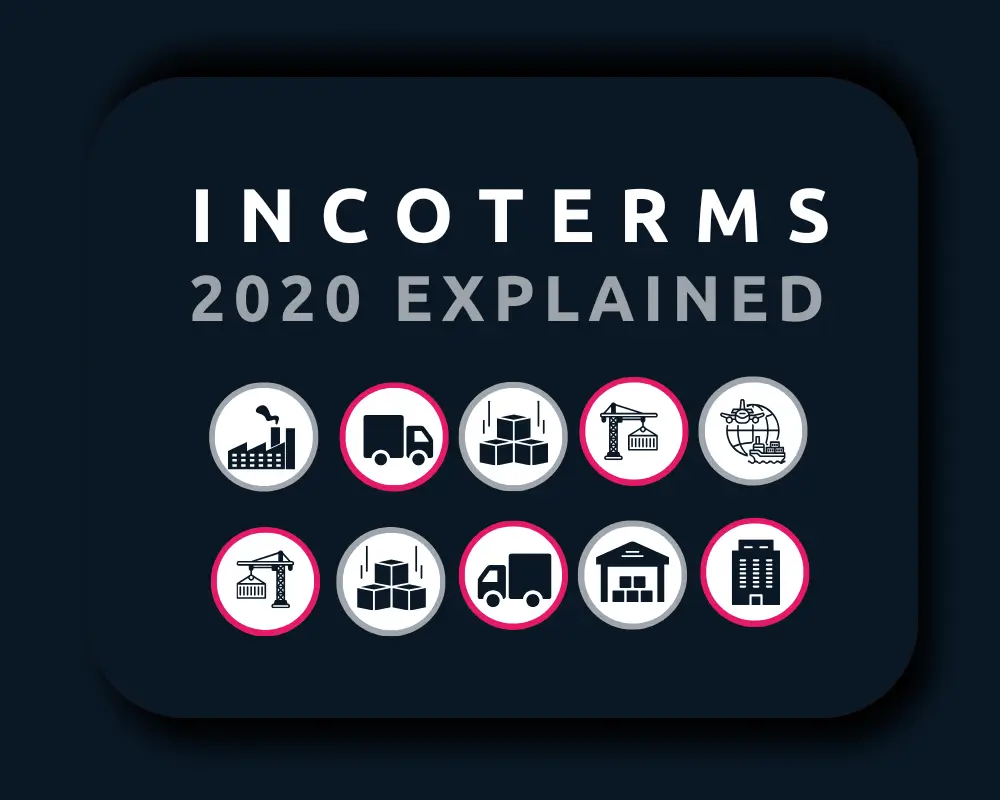
Incoterms (International Commercial Terms) are a set of 11 standardized trade terms published by the ICC. They define the responsibilities of buyers and sellers for the delivery of goods under sales contracts, outlining who covers what costs, when risks transfer between parties, and who is obligated to arrange transport at each leg of the journey.
When used correctly, they ensure smooth shipments with clear terms. However, they’re frequently misunderstood and misapplied, leading to various obstacles. It’s crucial to get Incoterms right for tech shipments to avoid significant delays, financial penalties, and reputational damage.
Some Incoterms, specifically FAS, FOB, CFR, and CIF, are applicable only to movements by sea and on inland waterways.
Hover over an Incoterm below to learn more about its associated risks and responsibilities.
Incoterms for any modes of transport:
EXW
ExWorks
- Seller Responsibilities: Make goods available at origin only.
- Buyer Responsibilities: Loading, export clearance, transport, insurance, import clearance, duties.
- Risks: Maximum buyer risk. Buyer may not legally manage export or compliance.
FCA
Free Carrier
- Seller Responsibilities: Export clearance and delivery to carrier.
- Buyer Responsibilities: Main transport, insurance, import clearance, duties.
- Risks: Risk transfers early. Buyer exposed during main transit.
CPT
Carriage Paid To
- Seller Responsibilities: Export clearance and freight to destination.
- Buyer Responsibilities: Insurance, import clearance, duties.
- Risks: Buyer carries transit risk without insurance included.
CIP
Carriage and Insurance Paid To
- Seller Responsibilities: Export clearance, freight, all-risk insurance.
- Buyer Responsibilities: Import clearance, duties.
- Risks: Risk transfers at carrier handover despite insurance.
DAP
Delivered at Place
- Seller Responsibilities: Transport to destination (not unloaded).
- Buyer Responsibilities: Import clearance, duties, unloading.
- Risks: Customs delays and taxes sit with buyer.
DPU
Delivered at Place Unloaded
- Seller Responsibilities: Transport and unloading at destination.
- Buyer Responsibilities: Import clearance, duties.
- Risks: Buyer still exposed at customs stage.
DDP
Delivered Duty Paid
- Seller Responsibilities: Transport, customs, duties, taxes, compliance, delivery.
- Buyer Responsibilities: Receive goods only.
- Risks: Minimal buyer risk. Seller must be legally compliant.
Incoterms for sea and inland waterway transport:
FAS
Free Alongside Ship
- Seller Responsibilities: Export clearance and delivery alongside vessel.
- Buyer Responsibilities: Loading, ocean freight, insurance, import clearance, duties.
- Risks: Buyer assumes risk before loading.
FOB
Free On Board
- Seller Responsibilities: Export clearance and loading onto vessel.
- Buyer Responsibilities: Ocean freight, insurance, import clearance, duties.
- Risks: Sea-only term. High risk if misused for air freight.
CFR
Cost and Freight
- Seller Responsibilities: Export clearance and ocean freight.
- Buyer Responsibilities: Insurance, import clearance, duties.
- Risks: Buyer bears transit risk without insurance.
CIF
Cost, Insurance and Freight
- Seller Responsibilities: Export clearance, ocean freight, basic insurance.
- Buyer Responsibilities: Import clearance, duties.
- Risks: Insurance often insufficient for high-value tech.
Incoterms define risk for technology, not just transport. For high-value hardware, the wrong term can trigger licensing issues, insurance gaps, or stuck shipments. The right structure enables global scale without introducing operational or regulatory risk.
While they were designed for cross-border trade, they’re equally important for shipments moving across state lines, as parties still need to know what risks and responsibilities they are accountable for.
What is DDP?
Of the 11 Incoterms, Delivered Duty Paid (DDP) places the greatest responsibility on the seller, across transport, customs clearance, duties, and taxes to the buyer’s named destination. The buyer assumes almost no responsibilities and faces minimal risk.
For technology companies shipping high-value equipment across borders, DDP is often the preferred choice: it removes all import complexity from the buyer.
But that control comes with intensive obligations, which is why many tech firms opt to work with a DDP solutions provider. With TecEx as your DDP service provider, the importer, buyer, or end user will still have a DDP experience, while the exporter or seller’s role is essentially EXW. We assume all shipping risks and responsibilities from end to end as your Importer of Record, while you maintain control and visibility over the shipment.
Choosing and Comparing Incoterms for Tech Trade
Control matters most for high-value tech. Incoterms that optimally align responsibility help reduce disputes, protect sensitive equipment, and keep deployments on schedule. But, global tech imports also typically require a local presence. Without a registered local entity serving as the Importer of Record, shipments may fail to reach regulated markets.
The wrong Incoterm could get your hardware stuck in customs or unaccounted for in the middle of the ocean, while the right one unlocks seamless global shipments from end to end. Many tech importers get stuck comparing the delivery-focused Incoterms, DDP, DPU, and DAP. Others get stuck on EXW vs DDP, which sit at complete opposite ends of the Incoterms spectrum.
EXW exposes tech buyers to maximum risk. It leaves product classification, export controls, and chain of custody unmanaged, which is dangerous for sensitive equipment. FOB and CIF can be poor fits for modern tech supply chains. These sea-only terms create liability and insurance gaps for air-freighted electronics and data center gear.
DAP and DPU still leave the import risk with the end user. Duties, VAT, and regulatory clearance remain unresolved, often the weakest link in tech deployments. DDP delivers predictability for complex technology. It centralizes cost, compliance, and custody under one accountable party, protecting your tech and your timelines, and is most effective when delivered by a tech-specific service provider.
Common Incoterm Pain Points for Tech Shipments
The most frequent challenges from incorrect Incoterms in tech shipments are:
Confusion and Mistakes
Unclear responsibilities can lead to delays or disputes, particularly concerning customs clearance or damage claims.
Damage During Transit
Damage during shipping can lead to disputes over liability for repairs or replacements.
Compliance Risks
Buyers and sellers may face fines or penalties if they fail to comply with import/export regulations.
Financial Risks
The risk of non-payment or late delivery can affect cash flow and business operations.
These challenges often arise from errors such as:
Tips for Smooth International Shipments
While the right Incoterm certainly clarifies the risks and responsibilities for each party in an import, there are three additional measures you can implement to optimize your shipments:
Liability Cover
No one can control unforeseeable challenges such as natural disasters, geopolitical issues, or cargo theft. With TecEx’s Liability Cover, we cover 110% of the value of your tech, offering end-to-end protection for domestic and international shipments. DDP drastically reduces your risk, and Liability Cover takes that one step further.
Scenario Planning
Scenario planning is a proactive approach to risk management. By identifying key factors affecting your business, you can map potential scenarios for each factor, assess their likely impact, and develop an adaptable response strategy.
Scenario planning enables tech traders to anticipate and adapt to global trade disruptions, protecting their competitive advantage and global strategy.
Supply Chain Risk Management
To achieve complete oversight and control over your tech shipments, you need an efficient Supply Chain Risk Management (SCRM) solution. This ensures that potential disruptions, from regulatory changes to geopolitical events, are anticipated and mitigated.
We provide end-to-end monitoring, from pickup to final delivery, identifying vulnerabilities and offering proactive solutions before they become costly delays. By partnering with TecEx, you gain visibility, compliance assurance, and the confidence that your sensitive tech arrives on time and intact. SCRM complements DDP by reducing operational surprises and ensuring your project timelines stay on track.
Simplifying Incoterms for Tech Trade
Incoterms can be tricky when dealing with sensitive tech. Mistakes can result in substantial costs, prolonged delays, the seizure and destruction of valuable goods, blacklisting, and reputational damage. Our DDP solution means you retain control over costs and time, while we take on all of your import/export risks and responsibilities, from pickup to final delivery.
With extensive tech trade expertise and a global presence, we can ship your tech DDP to over 200 locations as your Importer of Record. You can unlock new markets without establishing new entities, applying for complex licenses and permits, or taking on unfamiliar risks.
Unpack Our DDP Solution for Tech Imports
FAQs | Incoterms for Tech Traders


Are You Looking for a Tailored Solution?
If you are ready to start shipping immediately, submit this form, and an expert will get in touch to help you navigate Incoterms confidently. Our bespoke solutions enable you to take control of the risks and responsibilities in your supply chain, or pass them entirely onto us.