.webp)
When most people hear Incoterms, they immediately think of international shipping and border crossings. It’s a common assumption, and an expensive one.
Incoterms don’t stop mattering just because a shipment stays within a single country. In domestic trade, domestic Incoterms are just as essential, if not more so. Without customs checks, duties, or border controls to clearly define responsibility, liability can quickly become unclear.
Domestic shipping isn’t always as straightforward as it looks. Misunderstood Incoterms can lead to compliance issues, shipment delays, unexpected costs, and finger-pointing when things go wrong.
What Are Incoterms?
To understand the importance of domestic Incoterms, we must first understand the basics of what Incoterms are.
Incoterms (International Commercial Terms) are a set of 11 internationally recognized terms that define:
- Who pays for transport
- Where the risk is transferred
- Who controls the shipment at each stage
While these commercial terms are widely used in international trade, they are equally important in domestic moves, where defining responsibilities remains crucial.
What Are Domestic Incoterms?
Domestic Incoterms refer to the use of Incoterms when goods are shipped entirely within one country.
Think about when you are shipping goods from San Francisco to Miami. This shipment would be within the US. No customs clearance, import duties, or international taxes would apply.
However, the shipment would still involve:
- Transportation risks
- Insurance exposure
- Several parties involved
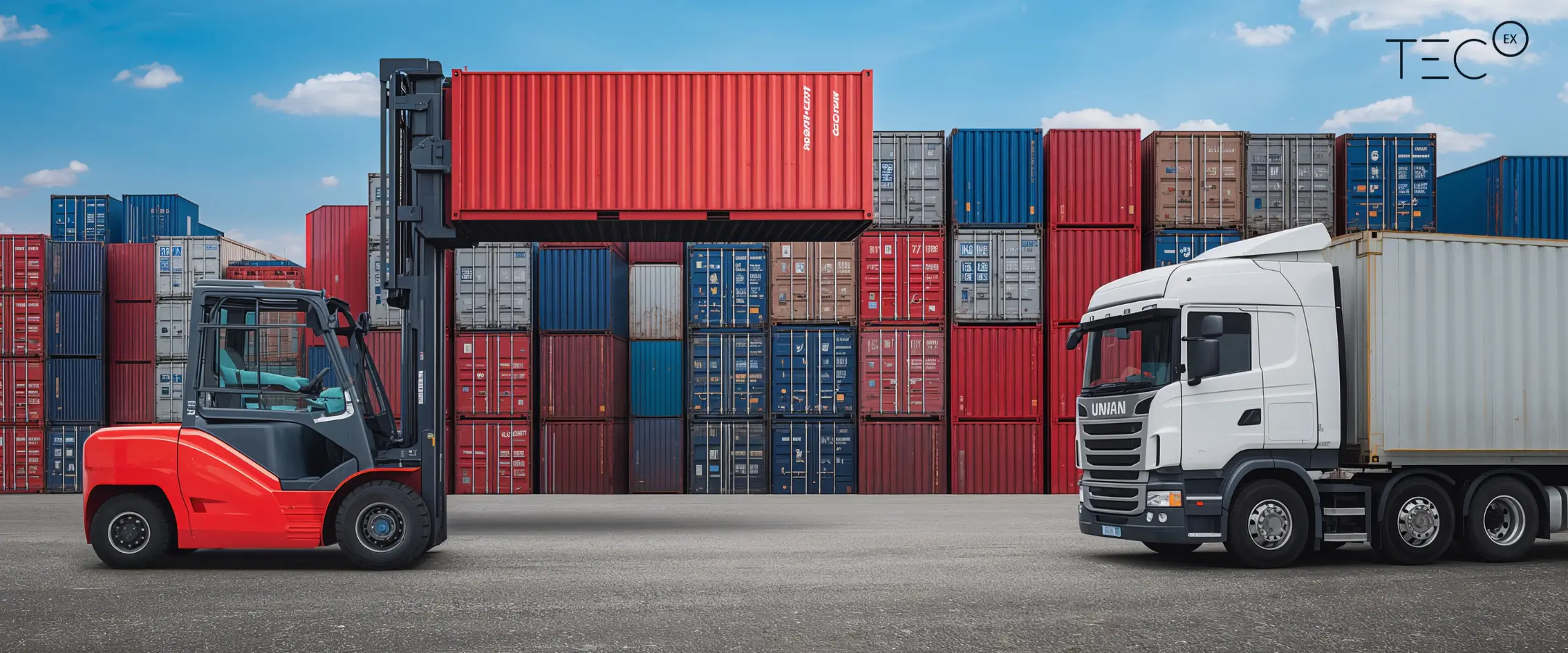
Domestic Incoterms remove all ambiguity during a shipment by clearly defining roles, costs, and risks, even when customs are not involved.
What Are the Benefits of Using Incoterms in Domestic Trade?
Liability and Risk in Domestic Incoterms
Domestic trade is not risk-free. Cargo can be damaged, delayed, or lost at any stage of transportation. While domestic Incoterms clearly define when risk transfers from seller to buyer, they do not eliminate financial exposure when something goes wrong.
This, however, is not where our services end.
Beyond clearly defining domestic Incoterms and ensuring your shipment reaches its intended destination, TecEx also provides liability coverage for your shipment. We provide 110% coverage, which is critical, especially within domestic trade, where risk is often understated.
With our domestic Incoterm expertise and liability coverage, we ensure that you are covered every step of the way.
How does TecEx Support Domestic Trade?
Even when shipments do not pass through international customs, TecEx plays a key role by:
- Advising on domestic Incoterms
- Managing freight
- Providing Liability Coverage
- Ensuring full compliance where needed
We deal with Incoterms for both international and domestic trade all the time, and know just how important expertise, planning, and protection are.
What Are the Most Commonly Used Domestic Incoterms?
Not all Incoterms in domestic trade are equally practical. While commercial terms are always situation-specific, domestic shipments remain within the same country and do not pass through customs, meaning no duties or import taxes apply.
In these cases, Incoterms are used solely to clarify responsibility, risk transfer, and role alignment between parties.
For domestic shipments, the most commonly used domestic Incoterms include Delivered Duty Paid (DDP), Delivered at Place (DAP), and Free Carrier (FCA).
The Bottom Line for Domestic Incoterms
Incoterms define ownership, risk, and responsibility, whether shipments cross borders or not.
Without clearly defining domestic Incoterms and opting for proper liability coverage, businesses can face costly disruptions.
Partnering with TecEx ensures clarity, protection, and expertise from start to finish. If you are importing tech internationally or domestically, we have you covered.