
Choosing the wrong Incoterm can cost you far more than you expect in time, money, and control, especially when dealing with high-value goods.
If you are involved in international trade, you have definitely encountered Incoterms. These 11 internationally recognized commercial terms are the shared language for cross-border trade.
Understanding key comparisons, such as Delivered Duty Paid vs Ex Works (DDP vs EXW), is essential to choosing the right Incoterms and protecting your margins.
.webp)
Only 18% of people feel confident that they are using the correct Incoterms. This low rate is concerning, as selecting the wrong Incoterm can lead to delays and costly errors.
The Difference Between DDP vs EXW
So let’s break it down. All 11 Incoterms indicate different lines of responsibilities and roles. At opposite ends of the spectrum are DDP vs EXW. Understanding the difference between these two is essential for anyone importing or exporting goods.
What is EXW?
Ex Works (EXW) places minimal responsibility on the seller. The seller packages the goods and makes them available. The buyer is responsible for everything else, including loading, transportation, export and import procedures, and all associated risks. As a result, the buyer bears all costs and risks from the moment the goods are made available.
What is DDP?
Delivered Duty Paid (DDP) is the exact opposite of EXW. The seller covers all costs and risks, including shipping, insurance, customs duties, and taxes, until the goods are delivered to the final destination. The buyer has minimal responsibility, and risk transfers only upon final delivery.
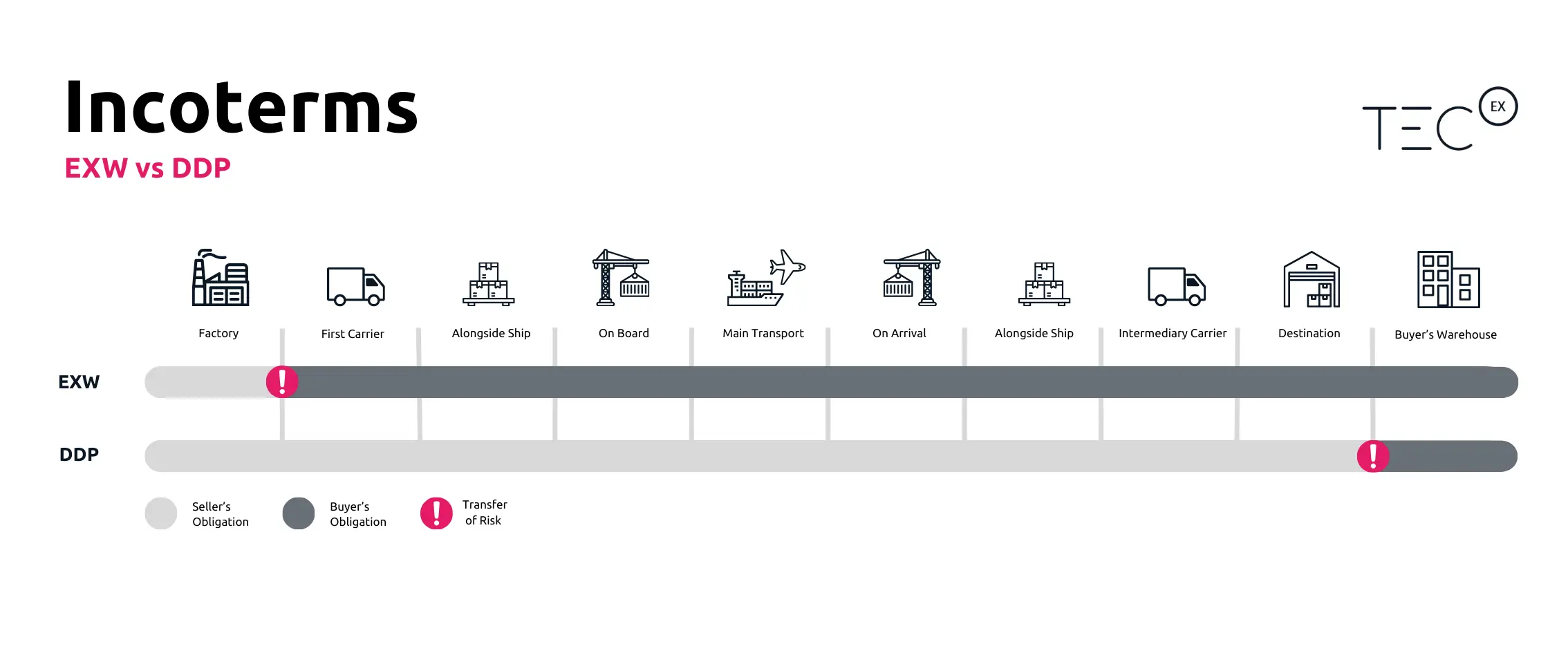
Key Takeaways of DDP vs EXW
- Incoterms are critical for global trade
- EXW and DDP sit at opposite ends of the responsibility spectrum
- EXW = Responsibility on the buyer
- DDP = Responsibility on the seller
- For high-value tech goods, DDP is better
- Expert support makes all the difference
How Do I Choose Between DDP vs EXW?
Choosing the correct Incoterm between DDP vs EXW is the first step of your international transaction. Choosing the right one depends on various factors such as:
| Control of Shipping | Costs | Risk Allocation | When to Use | |
|---|---|---|---|---|
| DDP | The seller has full control over the shipment, from origin to destination. | The seller takes over all costs. | The seller handles both export and import customs and assumes all risks. | Best for high-value, tech-sensitive products where visibility, handling, and end-to-end control are critical. Ideal when the seller wants to manage both export and import customs. |
| EXW | The seller has no control over the shipment once the goods are made available. The buyer assumes full control. | The buyer bears all costs. | The buyer handles all export and import customs and assumes all risk. | Suitable when the seller does not want to handle shipping, customs, or risk. Used when the buyer is willing and able to manage the entire shipment. |
Should You Use DDP vs EXW for High-Value Tech Imports?
Any high-value shipment means extra care and precision. Given the higher risk, a strong understanding of the import market and customs regulations is critical. These shipments often involve export controls, import licenses, accurate HS code classification, and strict customs compliance.
If the buyer is choosing between DDP vs EXW and decides to use Ex Works for the import of their high-value tech, they should ensure:
- All import and regulatory licenses are in place
- Correct product classifications are applied
- Local customs requirements are understood
Any missteps can lead to shipment delays, penalties, and the seizure of goods. For this reason, EXW presents a high risk for high-value shipments.
By contrast, Delivered Duty Paid is often the better choice for high-value goods. DDP allows the seller to maintain close control over the entire trade journey, ensuring that procedures are followed correctly.
Having an expert in the field is critical, as they can advise you on the required documentation, help you choose between DDP vs EXW, and help ensure compliance at every stage of the shipment, adding that extra sense of support.
TecEx DDP Solution
TecEx specialises in third-party DDP solutions for complex, high-value shipments, giving you full control of all of your deals while we take on the risk. It is the ultimate solution for both buyers and sellers. Unlike standard freight forwarders, TecEx acts as the Importer of Record, ensuring full legal and regulatory compliance.
Our tailored solution will let you benefit from:
- Risk-free shipping
- Global coverage
- Peace of mind
- A streamlined supply chain
- Shipment visibility
We go above and beyond by managing all country-specific customs requirements on your behalf, ensuring your goods reach their final destination in the most efficient and effective way.
Our in-depth knowledge of global trade regulations enables us to eliminate compliance risks, delays, and unexpected costs in this fast-paced, high-pressure environment.
We ensure full compliance with trade regulations, manage all cross-border logistics, and deliver the goods directly to your door. Focus on the big picture for your business expansion, and let us take care of the rest.
What Happens if I Use the Wrong Incoterm?
Using the incorrect Incoterm can lead to serious international shipping problems, including:
- Custom clearance failures
- Unexpected duties and taxes
- Disputes over who is responsible for delays or damages
- Regulatory non-compliance
- Increased costs and supply chain disruptions
Because Incoterms define the risk, responsibilities, and ownership, even a small misunderstanding can lead to serious consequences, making the decision between DDP vs EXW an important one.
A Strategic Choice Between DDP vs EXW
Deciding between DDP vs EXW isn’t just a logistical decision; it is a strategic one. By fully understanding the differences among Incoterms and partnering with an expert who will manage the complexities for you, you can avoid costly mistakes and ensure your goods reach their destination.