A Global Trade Reroute in Real Time
Trade patterns aren’t just changing—they’re being completely reimagined. What once felt like slow-moving predictions around nearshoring and regionalization has now become the reality on the ground. Long-standing global trade hubs are losing their dominance, while emerging markets are seeing a surge in activity.
Companies that once relied on predictable, long-haul shipping routes are now navigating a patchwork of regional lanes, each with its own risks and rules. As a result, supply chains are under pressure, logistics teams are stretched thin, and agility has become the defining trait of successful global businesses.
So what’s behind all this movement? And more importantly, where is it going?
Global Trade Shifts Are Creating Ripple Effects Everywhere
As trade routes shift, nothing remains untouched, from inventory planning to freight pricing.
Demand Forecasting Is More Difficult Than Ever
One of the first things supply chain professionals have noticed is how much harder it’s become to forecast demand. With cargo moving through unfamiliar lanes and ports, historical data isn’t as reliable as it used to be. The complexity has increased, and so has the risk.
Shipping Volumes Are Redistributing Globally
Shipping volumes are also taking unexpected turns. More goods are moving through South Asia, Africa, South America, and parts of Europe, putting strain on ports and logistics networks that weren’t built for this scale. Meanwhile, freight capacity remains tight, and rates haven’t found their footing. Locking in long-term pricing? That’s become more guesswork than science.
Air Freight is Surging
To add to the pressure, the demand for air freight is climbing. With ocean shipping facing unpredictability, companies are paying a premium to get goods where they need to be. But air cargo isn’t unlimited, and capacity ceilings are being tested every week.
Costs are climbing, delays are stacking up, and the entire system is being asked to do more, with less predictability.
Port Congestion Is the Most Visible Symptom
It doesn’t take a satellite map to see that port congestion has become a massive challenge. Especially in Southeast Asia and Europe, vessels are waiting longer to dock, container schedules are slipping, and the downstream effects are hurting businesses worldwide.
Inventory planning becomes a guessing game when containers are stuck at sea or held at port. Demurrage and detention fees are eating into margins. And what used to be a just-in-time model now feels more like just-in-case.
In short, global trade shifts aren’t just changing how we move goods, they’re changing how we plan, budget, and operate at every level.
Tighter Customs and Border Controls | The Hidden Bottleneck
As global trade shifts accelerate, global customs procedures have also entered a new phase. Governments are tightening border controls in response to everything from global health regulations to geopolitical risk.
The customs clearance process, once viewed as a back-end formality, is now a frontline concern for many global businesses. Delays at this stage can stall entire shipments for days or even weeks. Companies are being pushed to rethink their compliance strategies, not just to stay legal, but to stay competitive.
Geopolitical Tensions | The Wildcard in Global Trade
If trade lanes are the roads of the global economy, geopolitics is the weather—and in 2025, the forecast has been anything but clear skies.
US Trade Policy
Let’s start with the United States. Trade tensions between the US and countries like China, India, Brazil, and South Korea have created an environment of uncertainty. New tariffs can appear with little warning. Regulatory updates shift frequently. And for businesses dependent on cross-border movement, that makes long-term planning incredibly challenging.
Africa’s Sahel Region
Then there’s the Sahel region in Africa, where political instability continues to disrupt land and port-based logistics. Countries in West and Central Africa that rely heavily on exports are grappling with insecurity that threatens the flow of goods entirely.
China-Taiwan Relations
In East Asia, the situation between China and Taiwan continues to create unease. While open conflict hasn’t broken out, the threat is real enough that many multinationals are already adjusting their sourcing and shipping routes.
Middle East Maritime Chokepoints
Maritime chokepoints in the Middle East are also under stress. The Strait of Hormuz is seeing increased military activity. The Bab-el-Mandeb Strait suffered multiple Houthi-led maritime attacks earlier this year, disrupting oil shipments and driving up insurance costs. Even the Strait of Malacca, while not at war, is seeing a rise in piracy, adding another layer of risk in the Asia-Pacific corridor.
Today’s global trade shifts are as much about politics and security as they are about supply and demand. Thus, businesses can’t afford to ignore geopolitics.
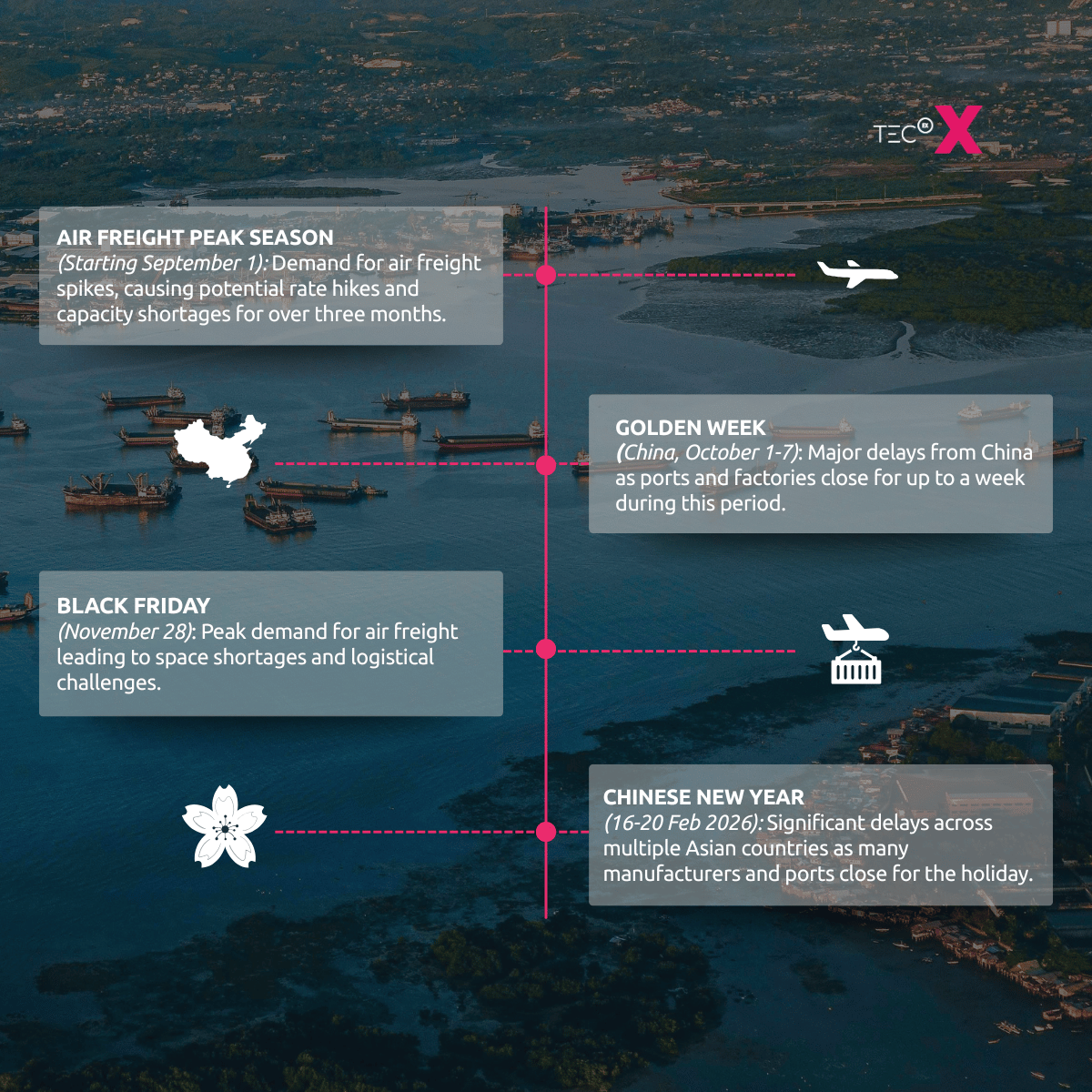
Seasonal Disruptions Are Compounding Global Trade Shift Pressures
While global disruptions make headlines, seasonal freight events continue to throw additional challenges into the mix.
For supply chain teams, this means that planning can’t just be reactive. It needs to account for these known disruptions while also remaining flexible enough to respond to the unknown.
Trade Policy Changes to Watch
Amid all these disruptions, trade policy is evolving as well, sometimes in ways that bring clarity, and other times in ways that add new complexity.
Agility Is the New Supply Chain Strategy | Key Takeaway
Global trade is no longer linear, predictable, or stable. The companies that will thrive in this environment are those that can adapt fast, diversify sourcing, and monitor risk proactively.
With so many variables at play, partnering with a global compliance and logistics expert can help you navigate the complexity with confidence.
Need Help Navigating the Changing Tides?
You don’t have to face global trade shifts alone. Partner with a trusted trade compliance expert who can help you:
- Stay compliant
- Reduce delays
- Minimize costs
- Build supply chain resilience