.jpg)
Europe
Lane is Available
Import to Switzerland
Switzerland is a tech hub and a highly innovative country, with its financial industry driving the country’s rapid digitalization. Switzerland is known for its highly attractive environment for high-value manufacturing and global exporting. As the Swiss tech industry continues to grow, so do the country’s import and export regulations.
Tax
Up to 8.1%

Duties
Up to 11%

Lead Times
1-2 Weeks
Restricted Items
N/A

Best Carrier Option
Freight Forwarder or Courier

Non-Working Days
Saturday, Sunday, and Public Holidays

Prominent Language
German, French, Italian
Exporting from and Importing into Switzerland
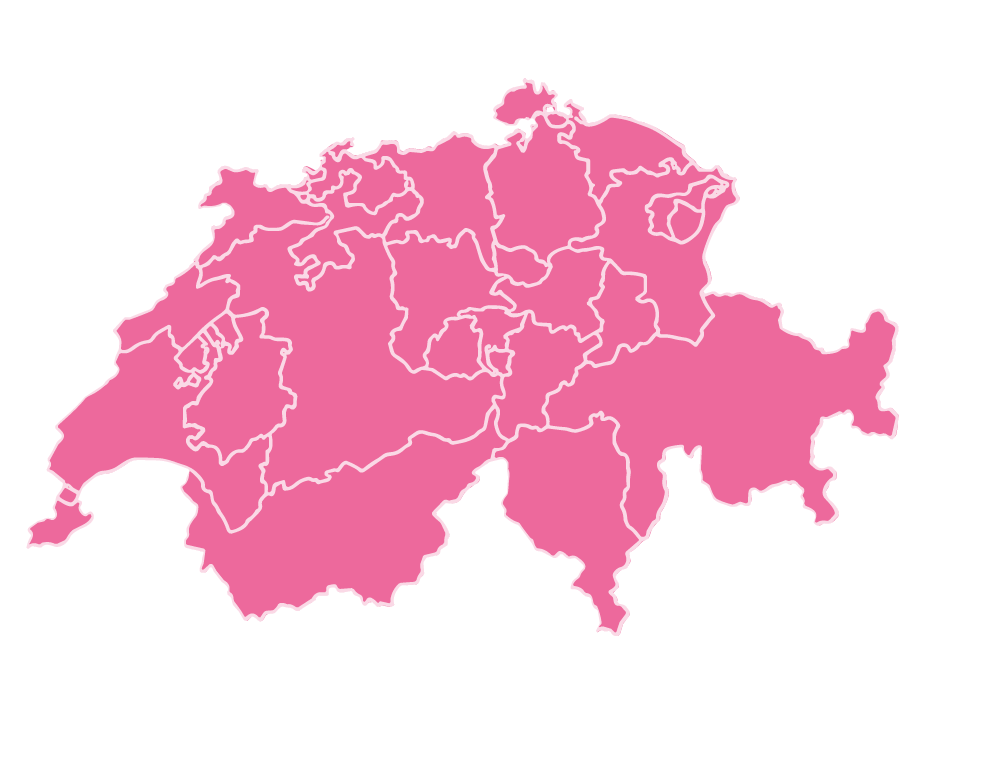
Switzerland is located in central Europe, making it easily accessible for trading with the rest of Europe. Its most significant trading partners include Germany, the United States, and China. Although Switzerland is not part of the European Union, it is strongly integrated with Europe.
While the country maintains a highly open economy through its extensive trade agreements, technology imports and exports require careful coordination to avoid customs delays, unexpected taxes, difficulties with customs declarations, and compliance violations.
Population
9 M
Biggest Industry by Export
Pharmaceuticals
Capital City
Bern
Biggest Industry by Import
Machinery
Switzerland is Europe’s leader in the number of billion-dollar tech startups per capita, supported by its affluent population and a gross domestic product of 884.94 billion USD. This has resulted in Switzerland producing high-quality products and expanding its investment in global trade. However, the high standards and quality level required in Switzerland mean navigating Swiss customs and regulations is particularly challenging.
Specialized Import, Export and Trade Solutions for Switzerland
Switzerland’s customs regulations are stringent, with strict compliance controls that can often lead to delays, as well as specific high-quality controls and technical regulations. Every shipment across Swiss-EU borders requires full customs declarations, Country of Origin documentation, and clearance procedures. Switzerland’s use of the Swiss Franc instead of the Euro also introduces currency fluctuation risks for tech importers.
Under the rules enforced by Switzerland’s Customs, officially known as the Federal Office for Customs and Border Security (FOCBS), a foreign company cannot act as the Importer of Record (IOR) in Switzerland without a local presence. To clear customs, FOCBS requires either a Swiss-established entity or a registered local representative/IOR to take legal responsibility for the shipment. This is where TecEx steps in.
IOR Services in Switzerland
TecEx acts as the Importer of Record for businesses exporting and importing to markets without a local presence, simplifying international deployments and reducing shipment and compliance risks. TecEx can assist you in obtaining the correct licenses, permits, and all required customs documentation. At TecEx, we also have extensive experience navigating duties, taxes, tariffs, and Harmonized System (HS) Codes, as well as mitigating foreign exchange risks for tech goods.
DDP Shipping in Switzerland
Our services and trade solutions span across 200+ destinations. Our Delivered Duty Paid (DDP) Solution simplifies the entire process, reducing the risk of delays by ensuring your tech clears customs smoothly. With our DDP Solution, we take the entire import process off of your shoulders. TecEx manages your shipment from pick-up to final-delivery, including all compliance processes, managing cross-border logistics and calculations of duties and taxes.
When importing and exporting to Switzerland, IT and high-tech equipment (servers, encryption units, AI GPUs, data center gear) frequently require SECO (State Secretariat for Economic Affairs) permits under the GCA (Goods Control Act) and national sanctions list regulations. SECO regulates the import and export of high-value technology and dual-use goods. Allow TecEx’s expert teams to take on full compliance responsibility and streamline your imports and exports to Switzerland.
Unique Pain Points Impacting Swiss Trade
Duties and tariffs can be hard to navigate in Switzerland. In contrast to most countries that assess customs duties based on a shipment’s monetary value, Swiss customs duties are levied based on the gross weight of the goods. Swiss import duties are also determined via Tares (the official Swiss customs tariff database) using the goods’ HS codes.
The FOCBS applies VAT rates to a broader taxable base for imports. This includes the transaction/market value of the goods, freight and transport costs, insurance fees, customs processing costs, and expected customs duties (and in some cases, any additional local handling fees). Swiss Customs enforces strict environmental and safety regulations to ensure high-quality goods, adding an extra hurdle for importing into Switzerland.
Telecom and network hardware (such as routers, switches, and wireless gear) must comply with the Federal Office of Communications (OFCOM) guidelines and align with EU CE mark requirements. Furthermore, minor documentation errors or discrepancies in descriptions on commercial invoices and packing lists can trigger immediate physical holds at major border hubs (such as Basel), resulting in delayed clearance and costly demurrage fees. Failing to recognize these requirements exposes tech importers to severe compliance negligence risks.
Specific Compliance Regulations for Switzerland
Passar 2.0
The biggest operational change for importing into Switzerland is the transition from the legacy e-dec system to Passar 2.0. As of January 1st, 2026, the legacy e-dec Export system has been decommissioned, and FOCBS is actively migrating import procedures from e-dec Import to the Passar digital platform.
Under Passar, Centralized Settlement Accounts (CSP) must be systematically bound to the importer’s Business Partner ID (BP-ID). This adds a highly complex administrative layer for companies without a local legal entity.
Abolition of Industrial Tariffs
As of January 1st, 2026, almost all industrial products and tech hardware are duty-free regardless of their country of origin. If your tech goods are intended to remain in Switzerland, you no longer need to provide a Certificate of Origin to claim lower rates.
If you plan to re-export the tech to the EU and want to claim preferential origin under the PEM Convention, you must still maintain and present formal proof of origin.
Complying with Swixit
Navigating trade in Switzerland can be complex, especially with EU to Switzerland customs challenges. This is particularly true for medical devices, as Switzerland is no longer part of the Swiss Mutual Recognition Agreement (MRA), also known as “Swixit.”
Post-MRA, non-Swiss medical device manufacturers must appoint a Swiss Authorized Representative (CH REP) and a local Swiss IOR, leading to a heavy increase in administrative hurdles.
CBAM and “Bilaterals III”
Swiss tech goods remain exempt from the EU’s Carbon Border Adjustment Mechanism (CBAM) because Switzerland’s emissions trading system is linked to the EU’s. However, Switzerland is currently assessing whether to launch its own “Swiss CBAM”.
Bilaterals III will further simplify conformity assessments for industrial and medical tech, reducing the need for duplicate testing between Switzerland and the EU.
SECO Dual-Use & Emerging Tech Controls
Switzerland has mirrored the EU’s new controls on emerging technologies and SECO has updated its Goods Control Ordinance to align with the latest international shifts. This includes stricter licensing for quantum computers, advanced semiconductors (AI-capable), and specialized cryogenic equipment. Under the CGA, these items require mandatory import/export permits from SECO via the ELIC online portal, which can cause extensive administrative delays if not prepared in advance.
Countries Associated with Switzerland
North America
United States of America (USA)
Asia
China
Ready to Start Importing into Switzerland?
Ready to simplify your next import into Switzerland? Contact TecEx today and our experts will guide you through every step, ensuring your tech shipments arrive hassle-free, on time, and fully compliant.