Tech supply chains are uniquely exposed to shipping disruptions, caught at the intersection of policy, supply bottlenecks, and geopolitics, where every cross-border move faces new risks.
Technology products are vulnerable to shipping disruptions from numerous angles. For one, they are frequently targets of trade policies as countries seek to regulate tech imports and exports. They are also exposed to several supply chain fragilities, as specialized manufacturers, like chipmakers, as well as suppliers of critical minerals and rare earth elements, are few and far between.
In addition, geopolitical risks grow as tensions rise between certain regions and nations, leading to uncertain supply chains and even physical conflict. As tech products typically undergo multiple cross-border journeys throughout their lifespans, both as individual components and finished products, they are repeatedly exposed to shipping disruptions.
Let’s examine the latest events that could cause, or are already causing, shipping disruptions for tech firms.
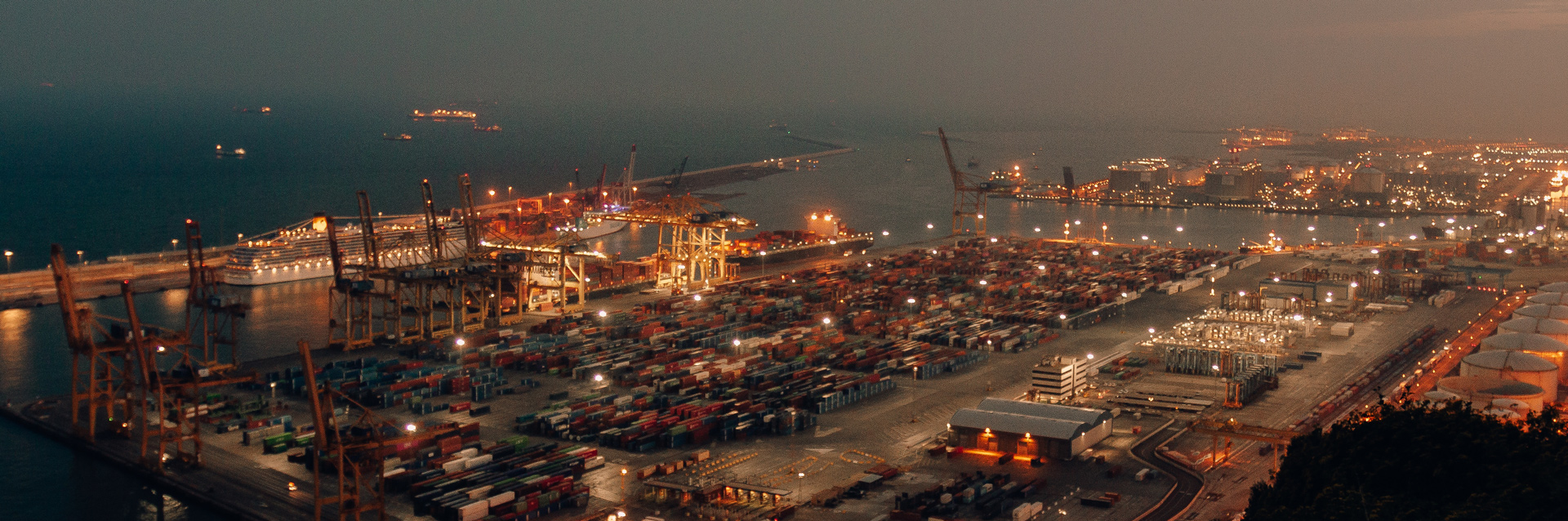
Disruptive Trade Policies
New policies often introduce strict regulations and disrupt supply chains. Importers need to adapt quickly, as one overlooked detail can cause significant delays and penalties. America is at the top of our list of challenging import countries in 2026 due to its changing trade policies.

America’s “Securing Accountability in Foreign Entries Act”
March 12, 2026 – Present
The US has proposed new legislation that could reshape trade for foreign Importers of Record and lead to significant shipping disruptions. The draft bill for the “Securing Accountability in Foreign Entries Act” could introduce significantly higher compliance standards for Importers of Record to prevent foreign exporters from circumventing duties and laws.
Essentially, IORs may need to:
To act as the IOR for an import into America, an entity would need to be classified as one of the following:
- An American citizen or a permanent resident.
- A business entity with a physical address in America and at least one owner who is either an American citizen or a permanent resident.
- A company that is registered in Canada or Australia (more countries may be added to this list).
- An affiliate of a well-established US company (at least three years in operation, at least 1,500 full-time local employees, and at least $1 million in US revenue and assets) that accepts full legal and financial responsibility for all related costs and penalties when acting as the IOR.
Firms importing high-value tech into the US must ensure they have an IOR that meets the requirements above. As TecEx meets these stringent IOR requirements, we offer a compliant pathway into US tech markets with seamless customs clearance and full regulatory compliance.

America’s Threat of AI Chip Licensing
March 6, 2026 – Present
The US is considering imposing export controls on the American AI stack.
The regulatory framework is looking to secure data center buildouts by giving the US government control over the international flow of US AI chips, potentially implementing:
- Export license requirements.
- Restrictions on using the chips in clusters.
- Government-to-government assurances or visits by American export control officials.
- Investments in the US.
The US Department of Commerce confirmed this on X, but emphasized that the framework differs from Biden’s export control framework for AI diffusion, which it criticized as “… burdensome, overreaching, and disastrous.”
The licenses may be tiered, based on the risk level of trade partners, but trusted allies could still face stringent requirements.
The shipping disruptions could be significant for the AI industry. AI firms and data centers need to prepare and protect their deployments with supply chain risk management, scenario planning, and even forward stocking in local warehouses.

The US Tariff War
January 20, 2025 – Present
US tariffs have caused significant shipping disruptions since Liberation Day in 2025. Hardware costs skyrocketed, supply chains had to adapt, strategies had to be altered, and front-loading became commonplace. However, US importers have watched rates rise and fall throughout the tariff war, with SCOTUS eventually ruling that those implemented under IEEPA authorities were unlawful.
Sectoral rates remain intact, and investigations using legal routes to implement new rates are ongoing. 16 trade partners are currently under investigation for unfair manufacturing capabilities causing trade surpluses, and 60 for forced labor practices. New rates could be imposed on US trade partners, upending global trade once again. Importers need to stay ahead to proactively respond to new disruptions.
Uncertainty surrounding new trade deals may also cause shipping disruptions, as terms have not been finalized and trade partners like the EU and India have paused implementation of their agreements.
Visit our Tariff Tracker for the latest updates.

EU-UK Post-Brexit Supply Chain Inefficiencies
February 1, 2020 – Present
Brexit caused immense shipping disruptions as frictionless market access between the European Union and the United Kingdom ended. More frequent shipping delays, supply chain inefficiencies, and the need for more documentation have had long-term structural effects on logistics in the region.
Recently, British Prime Minister Keir Starmer suggested that a customs union or closer ties could be considered to facilitate economic integration and bring the UK closer to the EU’s single market. However, even policies that facilitate simplified trade can cause shipping disruptions when importers are unfamiliar with new compliance requirements.

Shipping Disruptions Highlighting Tech Supply Chain Fragilities
When supply chains have unaddressed vulnerabilities, such as a lack of diversification, logistics chokepoints, and capacity bottlenecks, shipping disruptions could bring entire industries to their knees.

Taiwan Semiconductors and China
Ongoing
The demand for AI chips is high, and only a handful of specialized manufacturers can meet it.
Taiwan Semiconductor Manufacturing Company (TSMC) is the largest semiconductor foundry, supplying market leaders such as Apple and Amazon. America’s Treasury Secretary has admitted that over 90% of high-end chips are manufactured in Taiwan.
While the firm has chip fabs across the globe, chips made overseas often need to travel to a factory in Taiwan for the final packaging process (which connects multiple chips together for use in an AI data center).
If China were to take control of Taiwan and its AI chip exports to America, this shipping disruption could bring America’s AI industry to a complete standstill.

Disconnect in AI Chip Supply vs. Demand
Ongoing
Overlaying the scarcity of AI chipmakers is the fact that they are focused on manufacturing complex AI-capable chips to fulfill multiyear contracts with hyperscalers and neoclouds. Because of this, memory chips for other purposes, such as DRAM and NAND, are falling by the wayside. Supply is falling, and demand is not. In just a year, certain DRAM prices skyrocketed by almost 700%.
Products from AI gear to consumer devices like cellphones and gaming consoles are already seeing higher costs, impacting margins, causing delays, and making new projects unfeasible.
Additionally, data center buildouts are growing exponentially, so manufacturers will take time to build enough supply to satisfy this compounding demand. Tech firms are reviewing their strategies, resorting to reducing manufacturing volumes or halting forward stocking practices.

Critical Minerals and Rare Earth Elements (REE) Scarcity
Ongoing
Supply issues with critical minerals and rare earth elements could cause catastrophic shipping disruptions for the tech industry.
Critical minerals and rare earths are crucial to modern society and its complex technologies. Semiconductors rely on copper, gallium, and germanium. EVs and battery storage need chromium and lithium. Data center infrastructure needs copper and Platinum Group Metals (Iridium, Osmium, Palladium, Platinum, Rhodium, and Ruthenium). As adoption of these technologies grows, so does the demand for critical minerals and REEs – but the supply remains the same.
China globally dominates these industries, mining nearly 70% of the world’s rare earth minerals and processing just over 90% of them.
The escalating US-China tariff war in 2025 created bottlenecks in the flow of critical minerals and rare earth elements from China. By October 2025, China threatened to impose export controls on rare earths, which could have cut global output by $150 billion. The export controls were delayed for a year from October 30th, creating a quietly festering supply chain vulnerability.

Flooded Congo-Copper Export Corridor
March 2, 2026
The Kakosa bridge across the Kasumbalesa border of Zambia and the Democratic Republic of Congo was washed away by heavy rains, impacting exports through the region. This small, unassuming bridge is a vital supply route for a critical mineral: copper.
The Congo is the world’s second-largest copper producer, a critical resource for the AI, data center, and EV industries. Zambia’s output is also growing.
Exports from these regions usually cross this chokepoint before traversing to Southern African ports. Fragilities in physically small but strategically significant supply routes like this show how vulnerable the tech industry is to unpreventable weather events. The global demand for copper is high, and unless Congo and Zambia diversify these crucial supply routes, this critical mineral is at risk of future shipping disruptions.

Geopolitical Shipping Disruptions
Geopolitical tensions, even in the most distant regions, can have far-reaching effects on technology industries. These shipping disruptions are a significant contributor to global trade shifts and cause issues ranging from the physical endangerment of goods traversing hostile regions to blocked logistics chokepoints to sourcing risks.
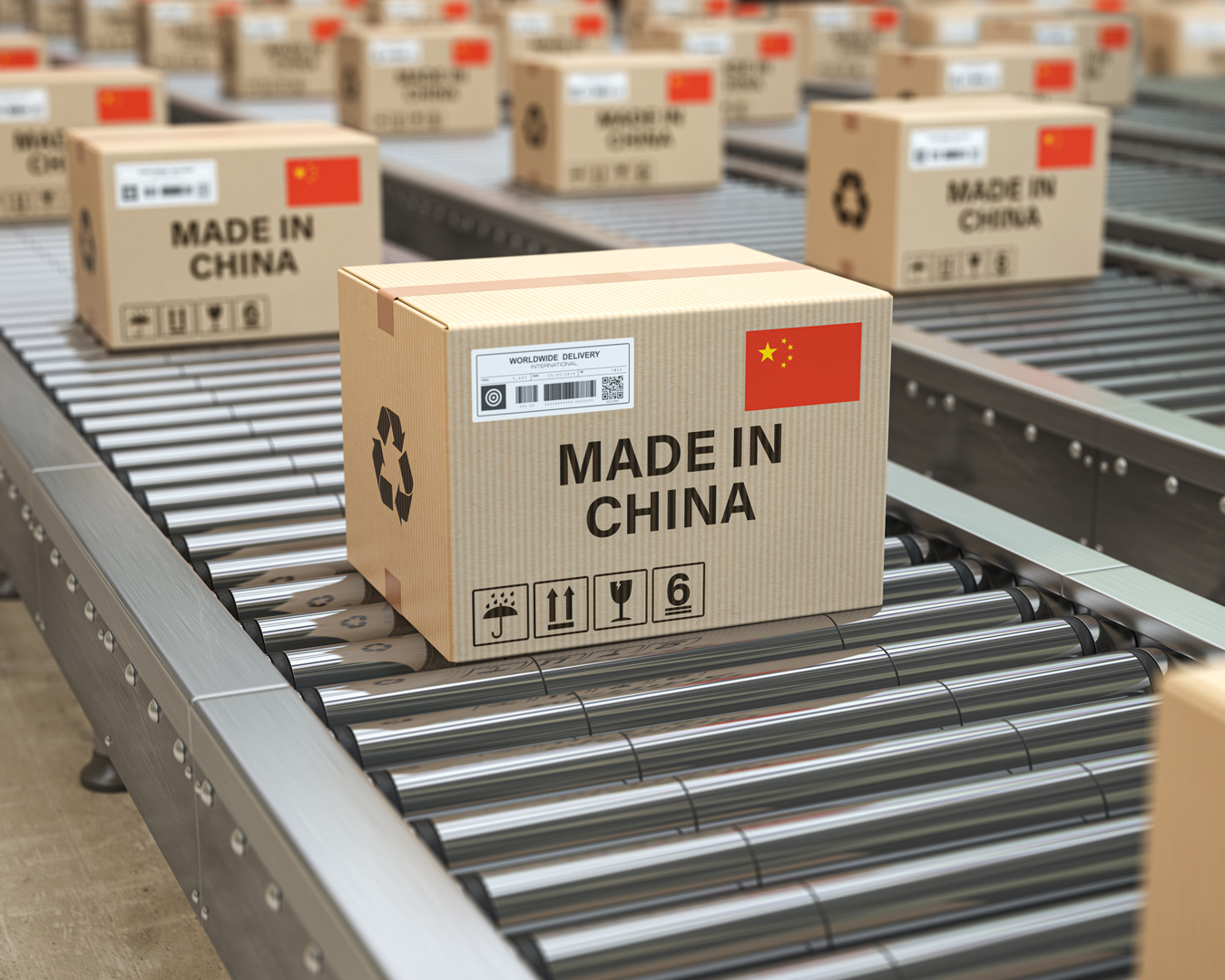
The US-China Trade War
Ongoing
Long-standing tensions between the US and China, stemming from the AI cold war and ideological incompatibilities, are contributing significantly to shipping disruptions for the tech industry. Trade restrictions, export controls, and retaliatory measures continue to bring uncertainty to cross-border logistics.
For instance, American restrictions on the export of advanced AI chips and related technologies mean that firms cannot ship certain products to China. New duties and licensing requirements continue to complicate trade flows.
Additionally, the future of the current tariff truce remains unstable as tensions remain unresolved.
Compliance, routing, and supply chain visibility are as critical as the sensitive tech hardware being shipped. Many tech firms are adopting new logistics strategies, such as the China+1 model. This means that China-centric supply chains are shifting towards Southeast Asia and other manufacturing hubs to build greater resilience against global shipping disruptions.
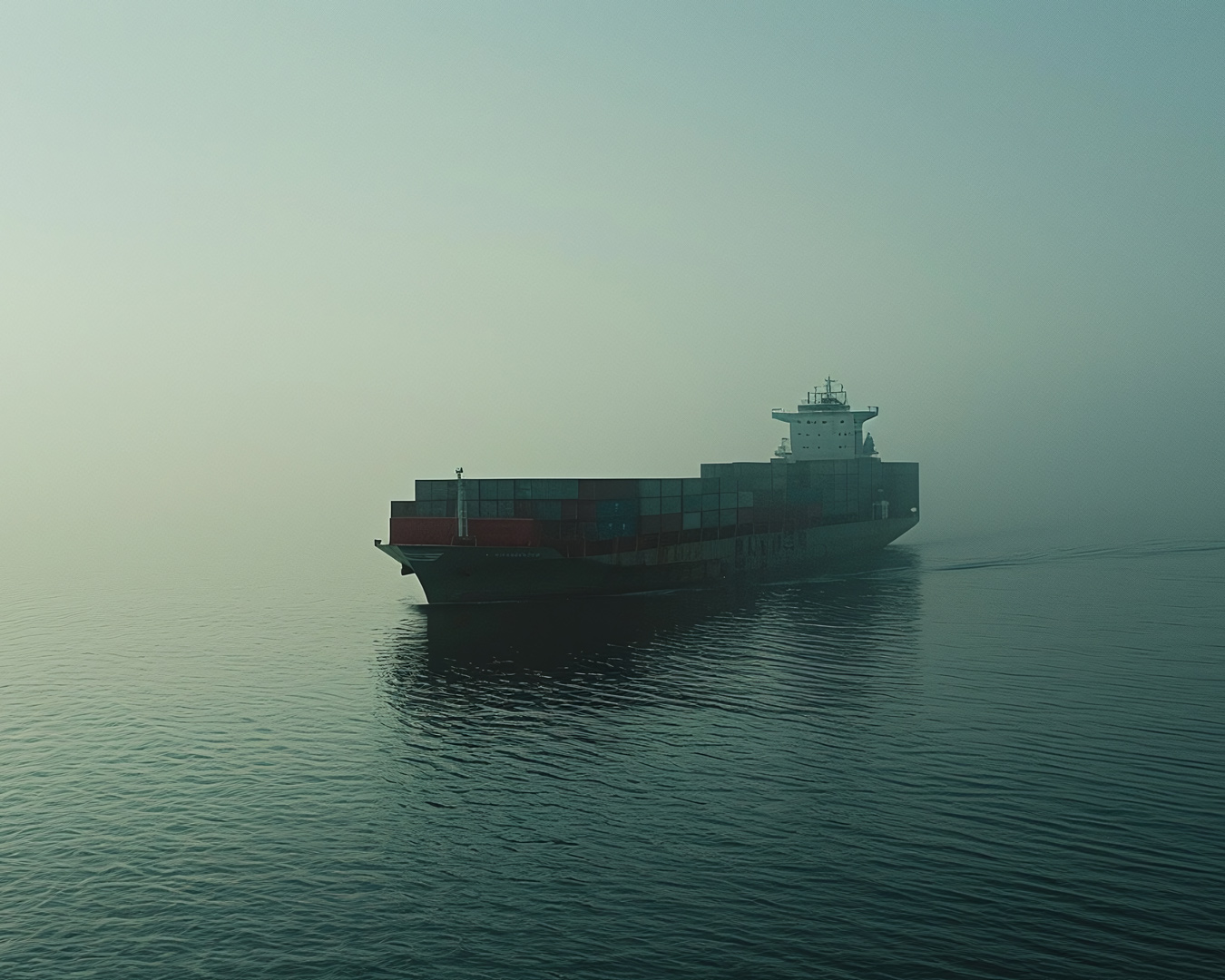
The Middle East Chokepoint: The Strait of Hormuz
February 28, 2026 – Present
Significant regional conflict in Iran and neighbouring countries has led to airspace restrictions across the Middle East due to security concerns, causing shipping disruptions in the region.
Commercial cargo ships have mostly been unable to safely traverse the Strait of Hormuz, a narrow channel between Iran and Oman. The Bab el Mandeb, a strait and chokepoint between Yemen and Djibouti, is also threatened as these tensions rise. Carriers have offered contingencies such as shipping to alternative ports, using storage solutions, returning cargo to its origin, and even changing the destination, significantly disrupting supply chains.
Global energy trade flows under threat lead to shipping disruptions, including knock-on congestion, causing backlogs for exporters to Gulf States and Asia. The chokepoint even threatens semiconductor supply, as Taiwan, a key chipmaker, may face higher energy costs and supply bottlenecks for crucial materials, chemicals, and components.
Dangerous events like this also impact maritime insurance. Many insurers have removed war-risk cover or increased cargo premiums in the region. These significant shipping disruptions have led global supply chains to rethink cargo routing between the Americas, Asia, and Europe.
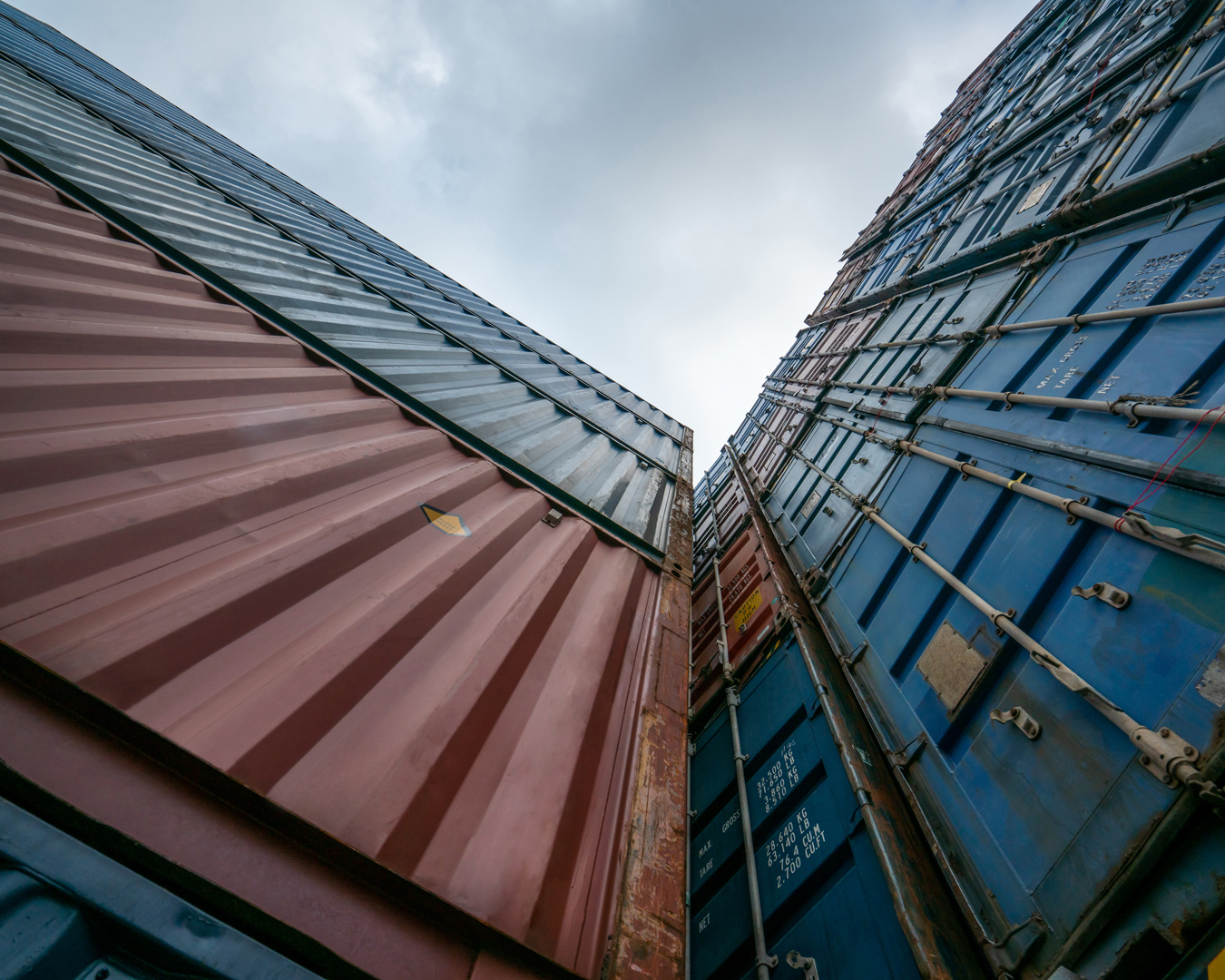
Afghanistan-Pakistan Border Closures
February 26, 2026 – Present
Since Pakistan suspended Afghan Transit Trade in October 2025, an estimated $400,000 in losses have been incurred due to damaged or expired goods. At least 10,000 containers are stranded in Pakistan, racking up demurrage fees and detention charges of around $120 per container per day. The impact on ports and logistics has slowed the region’s exports to and imports from Asia.
Geopolitical tensions between the two nations have recently escalated, impacting trade routes through the region with border closures and infrastructure damage.

Mexico Cartels and Unrest
February 24, 2026 – Present
Recent gang-related developments in Mexico led to shipping disruptions across air, port, and trucking logistics, causing delays in customs clearance and final-mile delivery in affected areas.

The Red Sea Crisis
October 19, 2023 – Present
The Red Sea crisis is a constant source of uncertainty that has reshaped global trade routes. Houthi rebel attacks have forced vessels to bypass the Bab-el-Mandeb Strait and Suez Canal, instead sailing around Africa’s Cape of Good Hope, adding up to two weeks to transit times and pushing freight rates up as much as 250%. These detours disrupt supply chains, inflate costs, and strain port capacity, while higher insurance premiums and congestion increase the impact.
The impact of the crisis has stabilized as importers and exporters have had time to adjust supply chains and prepare proactive risk mitigation strategies. However, the crisis is persistent, and businesses must continue to plan for potential delays.
As conflict in the Middle East continues, the risk of resumed maritime attacks in the Red Sea rises.

Russia, Ukraine, and the Black Sea
February 24, 2022 – Present
The Russo-Ukrainian war has blocked Ukrainian ports, reoriented trade routes, and led to many sanctions on Russia. PCMG reports that this has led to fewer port calls in both countries and to redirected cargo flows, “ultimately diminishing overall port activity, maritime trade, and connectivity.”
In March 2025, the US and Russia “… agreed to ensure safe navigation, eliminate the use of force, and prevent the use of commercial vessels for military purposes in the Black Sea.” The ceasefire was temporary, and Ukraine continued weaponizing cargo containers with Unmanned Aerial Vehicles. Containers using this trade route may be at high risk for scrutiny and inspections.
Unmanned Underwater Vehicles are another risk for cargo ships using this route, alongside loaded sea mines.

Critical Mineral Traceability and Congo-Rwanda Tensions
May 6, 2012 – Present
Ongoing tensions between the Democratic Republic of the Congo and Rwanda risk causing shipping disruptions to global tech supply chains, particularly by affecting trade in certain critical minerals. Coltan, a local term for columbite-tantalite, refers to the critical minerals niobium and tantalum. They are crucial for smartphones, laptops, and other electronics, and are heavily concentrated in the Congo. The DRC and Rwanda together account for around half of the global output of these minerals.
A significant percentage of coltan exported from Rwanda seems to have been illicitly introduced into the supply chain, smuggled from the DRC. Smuggling routes through Rwanda, as well as transport disruptions affecting trucks and cross-border movements, are impacting mineral traceability and exposing electronics supply chains to compliance and sourcing risks.
The instability of this critical mineral trade underscores how regional geopolitical tensions in Central Africa can ripple through the supply chains that underpin global technology manufacturing.
Shipping disruptions are no longer isolated incidents. They’re becoming a permanent feature of global technology trade that tech firms need to be prepared to mitigate. Companies that succeed will be those that build resilient, compliant supply chains with the flexibility to adapt quickly.
Stay Ahead of Disruptions and Protect Your Global Tech Shipments
Are global shipping disruptions impacting your shipments? Fill in the form to get in touch, and our expert team will contact you to get started with your tailored solution.
Stay Ahead of Disruptions and Protect Your Global Tech Shipments
Are global shipping disruptions impacting your shipments? Fill in the form to get in touch, and our expert team will contact you to get started with your tailored solution.