
The SCOTUS tariff ruling the world has been waiting for finally arrived on Friday, February 20th. Since early November 2025, the Supreme Court has been hearing arguments on President Trump’s IEEPA tariffs. After weeks of debate, the final ruling was against the tariffs, finding that the actions were beyond the President’s authority under IEEPA.
Now, global trade is shrouded in greater uncertainty. Trade patterns have spent months adapting to the chaos; international trade dynamics have shifted as countries have sought reliable trading partners, and new trade deals have emerged with concessions to lower the import duties their goods face in the US.
So, what’s next for America’s sweeping global tariffs?
President Trump has already introduced a 10% global duty. Businesses are beginning to seek refunds, while the Trump administration is striving to replace the IEEPA rates with alternative measures. US trade partners are starting to question their freshly inked trade agreements, as the tariff burden has been evenly distributed across most countries, undermining comparative advantages.
Yale’s The Budget Lab has reported that the new overall average effective tariff rate for American consumers will be 9.1%, which it notes is still “…the highest since 1946 excluding 2025.” If the global rate increases to 15%, the continuity of IEEPA rates will be fairly intact. In essence, US import duties may not be significantly altered after all.
What were the IEEPA tariffs?
Before we dive into what’s next, let’s take a look at what the IEEPA tariffs actually were. Since his Liberation Day in April last year, President Trump has turned to various trade remedies to address the USA’s trade deficit. These have included invoking the International Emergency Economic Powers Act (IEEPA) and leveraging authorities under Section 232 of the Trade Expansion Act of 1962 and Section 301 of the Trade Act of 1974.
IEEPA authorizes the President to regulate trade through certain means. President Trump leveraged it to impose measures such as country-based reciprocal tariffs, including stacked rates of 39% on Switzerland, 50% on Brazil and India, and other targeted rates on Canada, Mexico, and China. The 6-3 SCOTUS ruling found that these powers do not authorize the implementation of sweeping, country-specific duties.
However, the ruling does not render all of the new tariffs invalid.
So, What Does the SCOTUS Ruling Mean?
SCOTUS has determined that the rates implemented under IEEPA authorities are invalid.
Beyond IEEPA rates, sectoral tariffs remain in place, mostly affecting electronics, metals, and autos. These rates were introduced under Section 232 and Section 301 authorities, as the products were deemed to pose risks, such as national security concerns or unfair trade practices.
The remaining tariffs include:
- 50% on steel, products, and derivatives.
- 50% on copper, products, and derivatives.
- 50% on aluminum, products, and derivatives.
- 25% on autos and auto parts.
- 25% on specific semiconductors and derivative products (such as servers).
- Pre-existing Section 301 rates on China.
The removal of de minimis treatment will also remain in place.
Not Sure How Your Tech Shipments Are Impacted?
The country of origin, transshipment locations, components, and composition can all contribute to the final applicable duties. Our US shipping experts can help you understand how targeted duties and the new global rate impact your deployments and rollouts in America. If you have an upcoming shipment, we can create a transparent quote with accurate duty calculations so you can confidently determine the feasibility of a project.
Section 122 Tariffs | A New Global Rate
In addition to the existing sectoral rates, President Trump introduced a 10% global rate on almost all imports to the US under Section 122 of the Trade Act of 1974, effective February 24th. Previously exempt goods seem to remain exempt, such as USMCA-compliant items. Trump later threatened to raise the rate to 15%, and US Trade Representative Jamieson Greer clarified that it would be implemented “where appropriate.”

Section 122 explicitly enables the American President to impose ad valorem tariffs of up to 15% for 150 days in order to:
- Address large and serious American “balance-of-payment” deficits,
- Mitigate an impending significant depreciation of the US dollar, or
- Assist other countries in addressing an international BOP imbalance.
After 150 days, the trade remedy must also be approved by Congress, so the longevity of this rate beyond July 24th is unknown. This is also the first time a President has actually invoked Section 122 authorities to impose tariffs.
What’s Next?
At his 2026 State of the Union address, President Trump explained, “…as time goes by, I believe the tariffs, paid for by foreign countries, will, like in the past, will substantially replace the modern-day system of income tax.”
If you’re wondering, “Can Trump still impose tariffs?” The answer is yes, and the rates could be fairly high.
Other measures have already justified additional duties on imports, such as marine cargo equipment of Chinese origin, scheduled for implementation in November 2026, and on imports from Nicaragua, starting in 2027.
The administration is likely to continue its protectionist tariff agenda using other authorities. It’s already planning or carrying out investigations into items like:
- Batteries,
- Telecom equipment,
- Pharma, active ingredients, and medical devices,
- Processed critical minerals, and
- Polysilicone (used in semiconductors and solar panels).
President Trump’s alternative means to authorize new rates include:
| Authority | Justification | Maximum Rate | Conditions |
|---|---|---|---|
| Section 122 of the Trade Act of 1974 | International payments problem | 15% | 150-day limit, thereafter requires Congressional approval. |
| Section 201 of the Trade Act of 1974 | Threat to domestic industries | 50% | No time limit, but the rate must be lowered after 365 days. |
| Section 232 of the Trade Expansion Act of 1962 | National security threat | None | No time limit, but must be approved by the Commerce Dept. before imposition. |
| Section 301 of the Trade Act of 1974 | Discriminatory towards US firms or violates US rights | None | Four-year limit, but can be extended. |
| Section 338 of the 1930 Trade Act | Discrimination against US commerce | 50% | No time limit, and no approval required. |
While many options remain, none match the flexibility and immediacy of IEEPA.
US Trade Relations After The IEEPA Ruling
US trade relations have been significantly unsettled by the SCOTUS ruling. Ironically, those targeted the most by IEEPA, like Brazil, China, and India, seem to be in the most advantageous position after the ruling. Conversely, countries that were at an advantage, like the UK, Italy, and Singapore, have now fallen short.
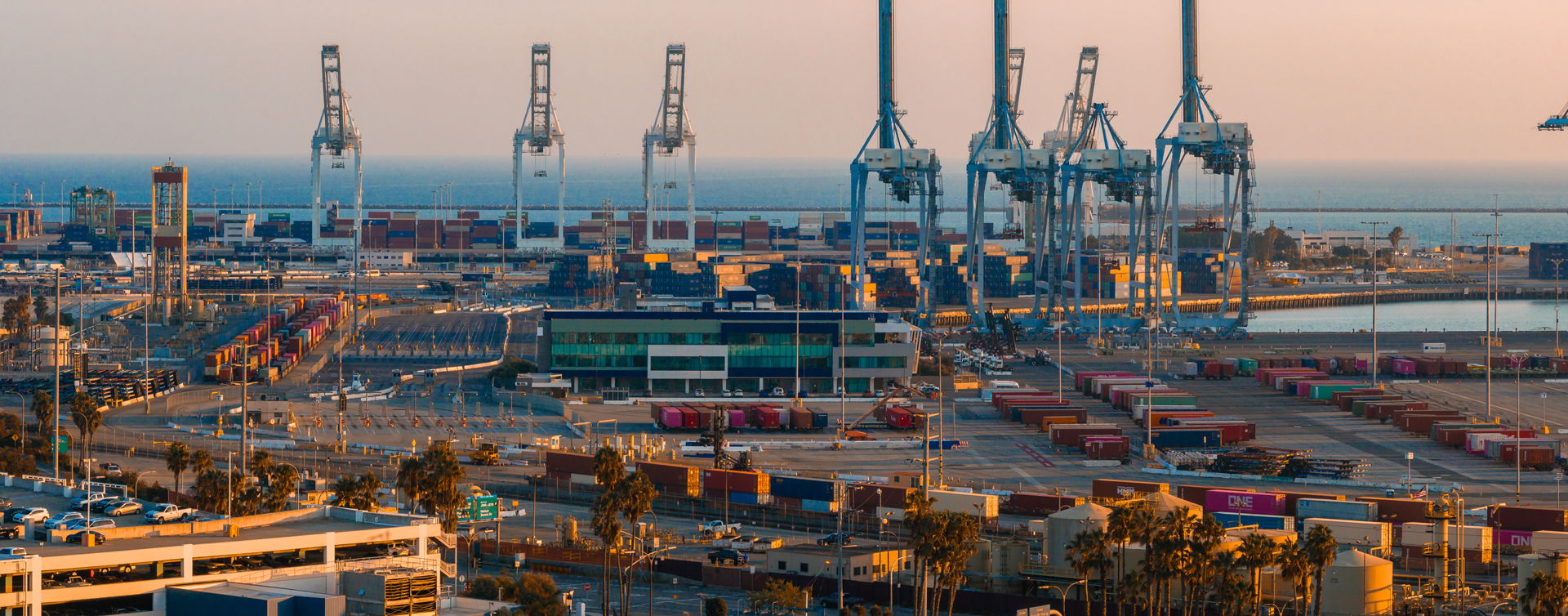
The tariff ruling has left the future of America’s new trade deals uncertain.
Indonesia had just reached a deal with America on the same day the SCOTUS ruling was released. It was set to unlock duty-free imports of coffee, cocoa, palm oil, and rubber to the US, while the US was ready for Indonesia to lift many of its tariffs on US goods.
The UK is seeking assurance that the terms under the Economic Prosperity Deal, such as exemptions on steel and pharmaceuticals, will remain in place. It was also the only country to have secured the lowest import duty of 10%, which is now at stake.
India was subject to 25% rates under IEEPA and planned to send trade officials to the United States to finalize a trade deal that would lower the duties to 18%. Now, the delegation has been delayed as India focuses on establishing what the ruling means for its trade with the US.
Similarly, the EU paused the approval process of its new deal with America as it awaits clarity from the Trump administration. It later emphasized that the US must uphold the terms that were previously agreed to. These included advantageous duty-free access for certain products and most-favored nation rates.
Other countries that had negotiated lower rates with the US, like South Korea, Australia, and Japan, seem to be taking a cautious approach as they wait to see America’s next steps. Trump has threatened countries that turn back on new trade deals with higher rates and new license fees on Truth Social.
Speaking on new and impending deals with trade partners, US Trade Representative Jamieson Greer has said, “We want them to understand these deals are going to be good deals,” adding, “We’re going to stand by them. We expect our partners to stand by them.”
For a nation like Brazil, the SCOTUS ruling is a source of relief, as the nation previously faced a 50% rate on most exports to the US. We may see another rush of front-loaded imports into the US from countries that significantly benefit from the IEEPA ruling while the tariffs are reduced.
Tariff Refunds
The collection of IEEPA duties ceased on February 24th, and the related tariff codes were deactivated on America’s Cargo Systems Messaging Service (CSMS). However, the SCOTUS ruling did not address refunds. Around $142 billion in revenue was collected from the IEEPA tariffs.
While refunds are a matter of concern for a shipment’s Importer of Record (IOR), the administration’s approach to refunds will be illuminating. If it decides to replace refunds with credits for future duty payments, this will reinforce that America’s tariffs really are here to stay.
How Does the SCOTUS Ruling Affect the US-China Trade War?
The same sources of US-China contention remain: the race for AI and technological dominance, incongruous industrial policies, and national security concerns. The only change to the US-China trade war after the ruling is the means by which it can be fought.

Many of the duties on China are imposed under Section 301 authorities, meaning Chinese exports to America still face an overall effective rate of 40%. The 2025 US-China Tariff Truce could be null and void in its entirety, as it was negotiated under pressure from IEEPA rates. However, the invalidated tariff barriers will likely be replaced with legal measures, and the pact may remain unchanged.
China has had various wins throughout the trade war. It reached a record trade surplus of $1 trillion late last year. More recently, President Xi Jinping met with Canadian Prime Minister Mark Carney in mid-January, followed by the UK Prime Minister in late January.
President Trump and Xi Jinping are still expected to meet in late March or early April. This time, Washington may not have the same leverage for negotiations. Previously, the US could counter Beijing’s trade threats, such as export controls on rare earth elements and critical minerals, by threatening 100% import duties on semiconductors and export controls on critical software. Given the circumstances, it may have lost some of its bargaining power.
While negotiations may be slower, they will likely also be less unpredictable. The tit-for-tat tariffs we’re all familiar with will be restricted by requirements for structured procedures and consensus.
Fortify Your Tech Shipments Against Global Uncertainty

After the SCOTUS ruling, trade uncertainty is evolving, not disappearing. New tariffs have already been introduced under alternative authorities, and businesses still face unclear compliance landscapes and shifting legal frameworks.
Partnering with TecEx for trade compliance solutions means that technology importers and exporters can:
- Navigate complex duty regimes and customs requirements to avoid costly misclassification, overpayments, or compliance penalties.
- Optimize HS code classifications, ensure accurate Certificates of Origin, and improve duty planning to unlock preferential rates and reduce tariff exposure where possible.
- Build resilient logistics strategies that adapt to evolving trade dynamics and regulations.
Whether you’re sourcing high-value tech components or scaling AI deployments, you should be able to focus on innovation rather than trying to keep up with frequent changes in the rules of global trade.