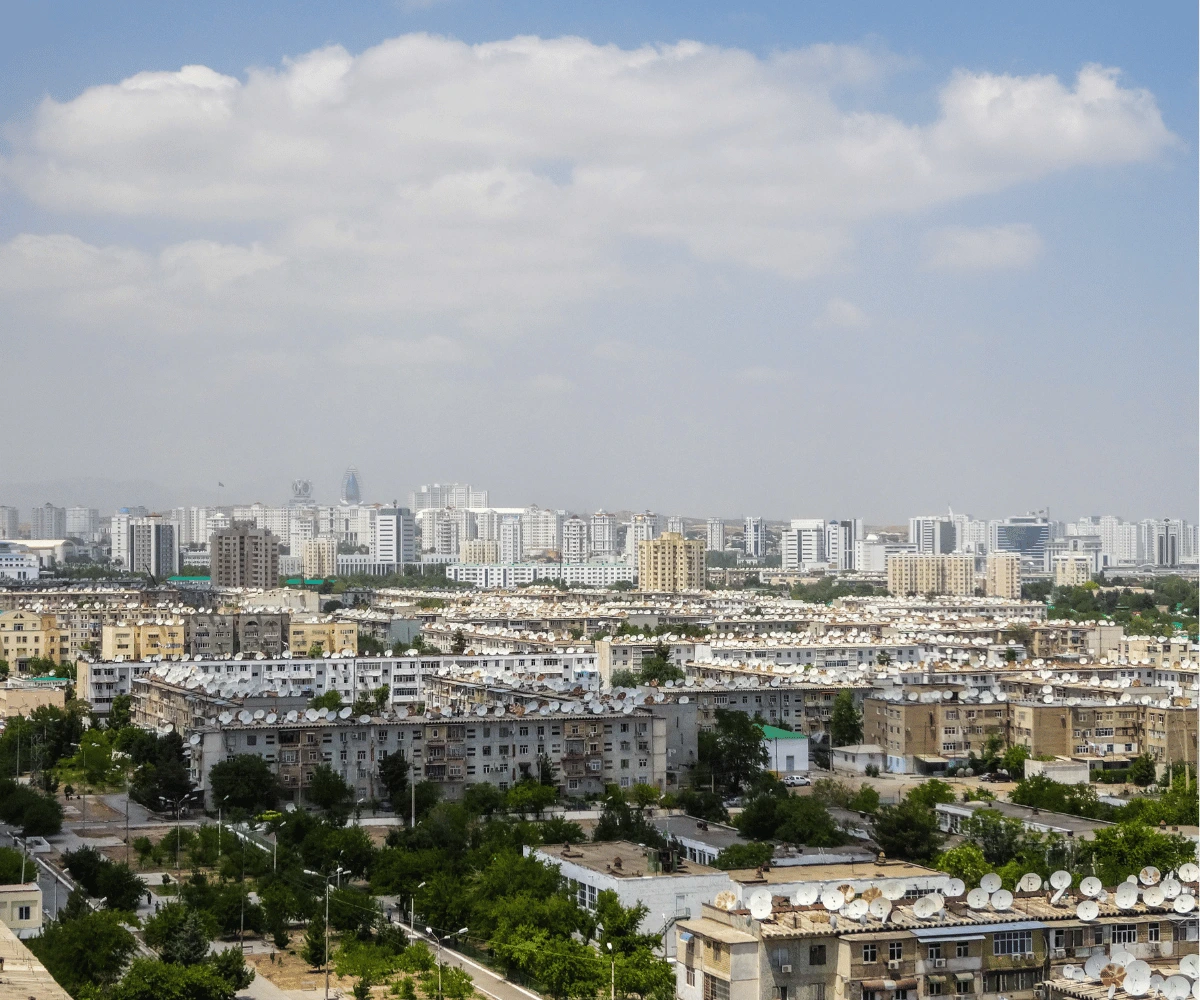
Asia
Lane is Available
Export and Import to Turkmenistan
Known for its vast natural gas reserves and a tightly controlled economy, Turkmenistan offers potential, but navigating its complex import regulations and compliance requirements demands expertise.

Tax
Up to 12%

Duty
Up to 10%

Lead Times
4-5 Weeks

Restricted Items
N/A

Best Carrier Option
Freight Forwarder

Non-Working Days
Saturday, Sunday, and Public Holidays

Prominent Languages
Turkmen; Russian; Uzbek

Turkmenistan’s Import and Export Landscape
Turkmenistan is a natural resource powerhouse, with natural gas dominating its export portfolio. Roughly half of the gas produced is consumed domestically, while the rest primarily flows to China. Despite abundant resources, the country’s trade data is limited and opaque, reflecting a tightly controlled, centrally managed economy where most large business decisions require approval from top government levels.
Population
7.6 M
Biggest Industry by Export
Natural Gas
Capital City
Ashgabat
Biggest Industry by Import
Electrical Machinery and Equipment
Private ownership is restricted, especially in land and heavy industry, while retail trade, services, agriculture, and production sectors allow some private participation, though often under government price controls. Turkmenistan’s economy remains state-driven, significantly impacting import procedures and business operations.
Hydrocarbons dominate exports, but the government actively pursues diversification, developing petrochemical industries, infrastructure projects, and new transportation routes by road, rail, and sea. Turkmenistan has also taken steps toward international trade integration, including launching a single digital window for export-import procedures in 2024, designed to streamline operations.
Unique Pain Points in Turkmenistan Import Compliance
The Turkmen business environment is fraught with uncertainty, with laws and regulations frequently changing or being interpreted inconsistently across agencies. Corruption is pervasive, and business practices often deviate from Western norms. The judicial system is not independent, operating under executive directives, which complicates legal recourse and contract enforcement.
These realities translate into heightened risks for importers—from delayed shipments due to bureaucratic red tape to unexpected inspections and fees, and difficulties securing licenses or approvals. Importers must be prepared for a lengthy, complex process that demands meticulous documentation and ongoing local engagement.
Importing goods into Turkmenistan comes with several notable hurdles, many of which stem from the country’s centralized control and bureaucratic systems:
Complex Contract Registration:
One of the biggest compliance challenges is registering import contracts with the State Commodity and Raw Materials Exchange (SCRME). This is mandatory before goods enter the country. The process is highly bureaucratic, requiring approvals from various ministries and scrutiny over price justifications and contract feasibility by the Supreme Chamber of Control.
Cumbersome Customs Procedures:
Customs clearance in Turkmenistan is slow and bureaucratic. Importers must provide detailed documentation, including registered contracts, bills of lading or cargo movement reports, certificates of origin and quality, and sometimes additional licenses depending on the goods imported.
Hidden Trade Barriers:
While official tariffs are not publicly defined, in practice, customs duties and excise taxes on imports are significant and unpredictable. These add layers of cost and complexity that foreign businesses must factor into their plans.
Licensing and Approvals:
Importing certain categories of goods requires approval from the president or the Cabinet of Ministers, especially for dual-use technologies, radioactive materials, or sensitive equipment.
Foreign Exchange Controls and Payment Delays:
Companies face tight foreign exchange controls, and collecting payments, especially from government ministries, can be a major obstacle.
Top Trade Partners of Turkmenistan
Europe
Turkey
Europe
Russia
Opportunities in Turkmenistan’s Import Market
Despite the challenges, Turkmenistan presents unique opportunities for businesses with the right approach:
Energy Sector Growth:
The hydrocarbon industry remains the country’s largest sector, with growing demand for technology and infrastructure to support new oil and gas fields, pipeline networks, and emission reduction initiatives.
Infrastructure Development:
Ambitious government plans to upgrade transportation infrastructure open opportunities for companies supplying construction materials, machinery, and technology solutions.
Trade Diversification:
Recent initiatives, such as the gas swap arrangement with Iran and Turkey, aim to reduce Turkmenistan’s reliance on Chinese exports and diversify trade routes, potentially easing import-export dynamics over time.
WTO Accession Efforts:
Turkmenistan’s pursuit of WTO membership suggests a gradual alignment with international trade standards, which could improve transparency and predictability for foreign importers.
How Our Specialized Solution Simplifies Import to Turkmenistan
Given Turkmenistan’s complicated import compliance environment, having a knowledgeable partner is invaluable.
Partnering with us means your import operations in Turkmenistan can proceed with confidence, allowing you to focus on growing your business while we handle the complexities of compliance and regulation.
Our specialized Turkmenistan import compliance service provides:
Expert Contract Registration Support:
We help prepare and register your contracts with SCRME, ensuring timely approvals and compliance with government requirements.
Customs Clearance Management:
Our team coordinates the entire customs process, from document preparation to clearance, minimizing delays and unexpected fees.
Regulatory Monitoring:
We track changes in regulations and government policies, keeping your business informed and compliant amidst shifting legal landscapes.
Local Liaison Services:
Navigating communication with ministries and government bodies can be a challenge. Our local experts bridge the gap, managing correspondence and official procedures efficiently.
Risk Mitigation:
We advise on strategies to handle foreign exchange restrictions, licensing hurdles, and documentation requirements tailored specifically to your industry and import goods.
Ready to Export or Import to Turkmenistan?
If you’re considering importing to Turkmenistan, understanding the unique challenges and opportunities in this Central Asian market is crucial. Contact us to explore import/export solutions that will suit your needs.