Import to the EU
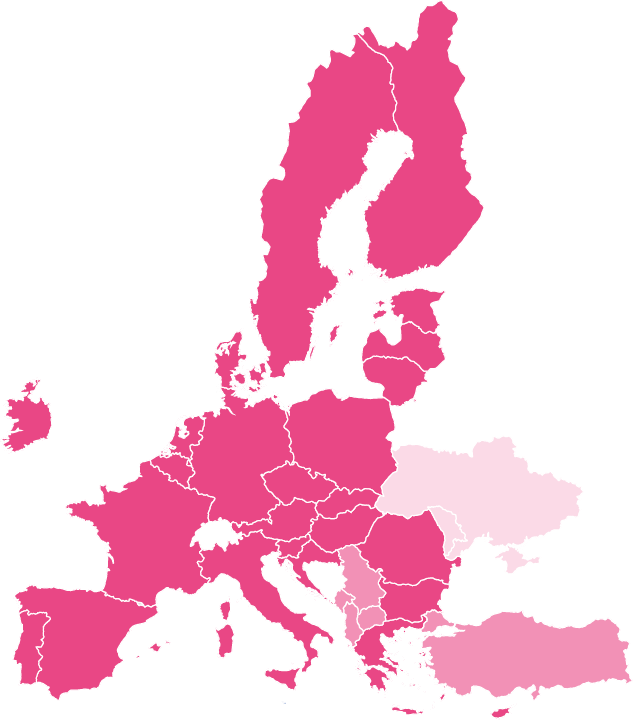
The European Union (EU) consists of 27 member states and is the largest trading bloc in the world. Operating as a unified Single Market, the EU enables the free movement of goods, services, capital, and people through a harmonized regulatory framework. For technology companies, the European Commission plays a key role in shaping customs policies, product regulations, dual-use controls, cybersecurity requirements, and digital sovereignty initiatives across the region. The EU is widely recognized for setting global benchmarks in tech regulations, digital transformation, and international trade compliance.
$460+ billion of high-tech manufactured goods sold in 2023.
20%+ of all ICT spending is generated by Germany.
$565+ billion from high-tech EU exports in 2024.
$190+ billion electronics/telecommunications imports in 2025.
7.26% CAGR expansion for cybersecurity, the fastest-growing EU tech product.
Tech Trade in the EU
The EU is a known global digital powerhouse, exporting more than $1.5 trillion in services in 2023, with telecommunications, computer, and information services accounting for more than 20% of total services exports. The EU’s digital infrastructure is expanding rapidly due to the growing demand for AI, cloud computing, and 5G services. Colocation and hyperscale data center capacity continue to grow, too, while grid constraints in established hubs such as Frankfurt and Amsterdam are encouraging investment in emerging markets across Southern and Northern Europe.
Cross-border trade in the EU is supported by harmonized regulatory frameworks, digitized customs processes, dual-use export controls, and the Union Customs Code (UCC). Deployments of high-density server infrastructure and advanced cooling technologies in the EU require compliance with sustainability and energy-efficiency regulations, including the recast Energy Efficiency Directive (EED). Hyperscale data center development remains particularly strong in the Nordics, Ireland, and the Netherlands, highlighting the need for expert EU customs compliance.
EU Trade Compliance Challenges
Top EU Import and Export Lanes for Tech


Belgium
Belgium is one of Europe’s most important logistics and data connectivity hubs, with strengths in pharmaceuticals, cloud services, telecommunications, electronics, and data center infrastructure. The proximity of the Port of Antwerp-Bruges and Brussels (the center of EU regulatory activity) to EU institutions makes Belgium a key entry point for non-EU businesses. Importers must comply with EU customs regulations, Belgian VAT requirements, CE marking obligations, and environmental regulations covering WEEE, batteries, and packaging.
In Belgium, it is also mandatory to obtain EU EORI registration and submit customs declarations through the IDMS system. Technology companies often encounter challenges with customs valuation, importer liability, and dual-use controls. TecEx provides specialized IOR and VAT Recovery solutions for hassle-free door-to-door delivery and accelerates technology deployments into Belgium and across Europe.
France
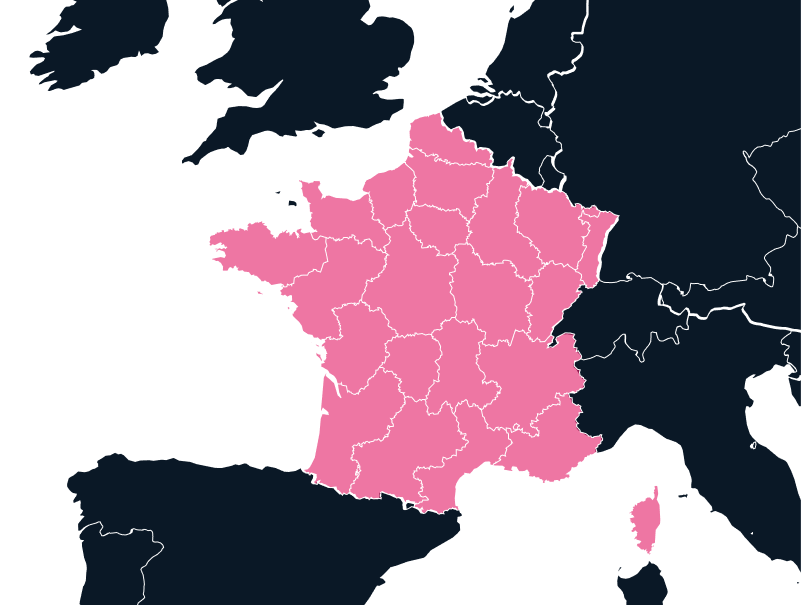
France is a major European technology and logistics hub, with leading sectors spanning aerospace, cloud computing, AI, telecommunications, semiconductor design, and data center infrastructure. Home to one of Europe’s largest AI ecosystems, France is a strategic gateway for non-EU technology companies entering the Single Market. Cross-border trade in France is administered by French Customs (DGDDI) through the DELTA IE customs platform. Compliance in France is enforced through EPR schemes, including requirements for packaging and batteries, as well as the AGEC circular economy framework.
Importers in France face challenges with EORI registration, import VAT exposure, customs valuation, and tariff classification. High-value IT infrastructure and data center equipment shipments often receive additional scrutiny, making compliance documentation critical. TecEx helps non-EU organizations manage French customs, tax obligations, product compliance, and regulatory requirements.
Germany
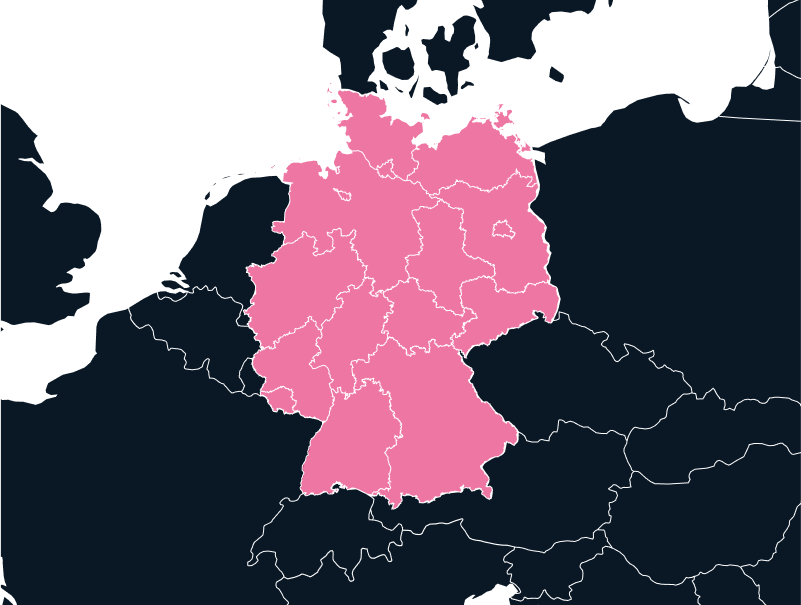
Germany is the EU’s largest importer and exporter and one of the world’s largest ICT markets. Its leading tech sectors include automotive electronics, industrial automation, software, medical devices, and AI data centers. Trade follows EU customs law, administered by the German Customs Administration (Zoll).
Imports require a German EORI number, electronic filing through the ATLAS system, and 19% import VAT. Technical documentation must be in German, and hazardous substance declarations are mandatory. Tech deployments must also comply with ElektroG, NIS2 cybersecurity standards, and the Energy Efficiency Act, while dual-use exports need BAFA licenses. An IOR and EOR assumes legal liability and helps prevent seizures, retroactive tax assessments, and costly delays.
Ireland
Ireland is a major multinational hub for biopharmaceuticals, medical technology, and ICT hardware distribution. Ireland’s customs rules depend on whether you arrive from the EU or a non‑EU country. Navigating Irish trade requires strict adherence to EU Common Customs Tariffs, and non-resident entities face complex import VAT liabilities.
Imports to Ireland require an EU EORI number and dual-use licenses for certain advanced technologies. To manage Ireland’s trade barriers, foreign tech exporters can utilize an IOR that serves as the local entity on customs documentation, assumes legal liability, manages dual-use permits, and secures PVA eligibility to prevent costly delays during hardware deployments.
Spain
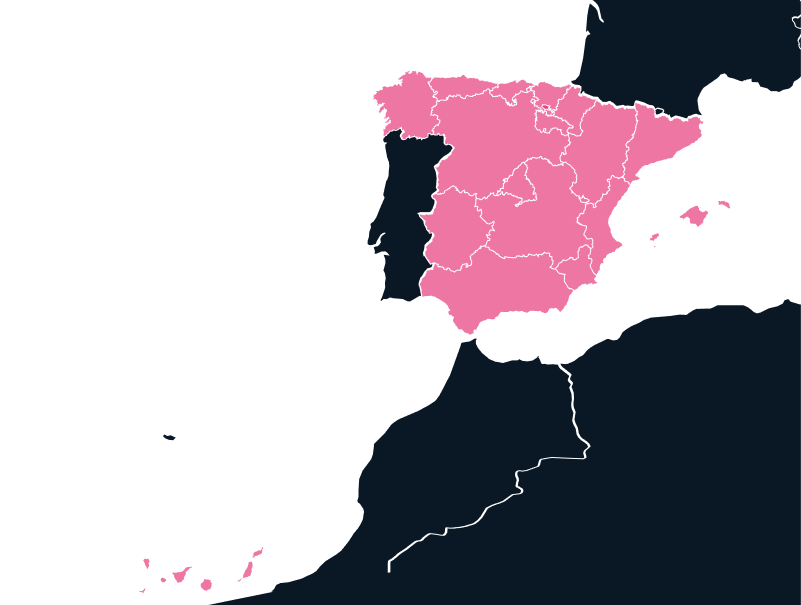
Spain has one of Europe’s most advanced digital infrastructures, with more than 95% fiber coverage, and growing investment in hyperscale data centers, cloud platforms, and AI-driven technologies. The country is fully integrated into the EU Single Market and the EU Customs Union and is governed by pan-European environmental directives.
Import declarations are submitted through the Spanish Tax Agency (Agencia Tributaria) DUA electronic system. Standard import tariffs follow the EU Common Customs Tariff and are subject to a 21% standard VAT rate. Tech equipment requires compliance with Spanish consumer protection standards.
Sweden
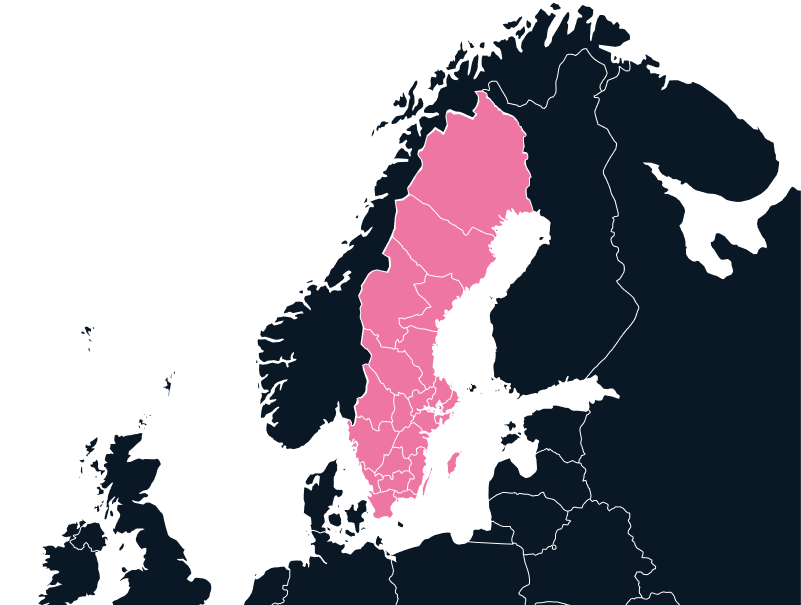
Sweden is one of Europe’s most advanced digital economies, and the country has become a preferred destination for hyperscale and AI infrastructure because of its abundant renewable electricity and naturally efficient cooling conditions, making it one of the region’s most attractive locations for sustainable data center deployments.
Manufacturers and importers placing equipment on the Swedish market are typically required to register with approved collection schemes such as El-Kretsen for WEEE reporting and recycling obligations. Technology imports must also meet battery, packaging, and Swedish conformity requirements. TecEx helps importers and exporters navigate Swedish regulatory requirements and supports seamless technology deployments throughout the Nordic region.
The Netherlands
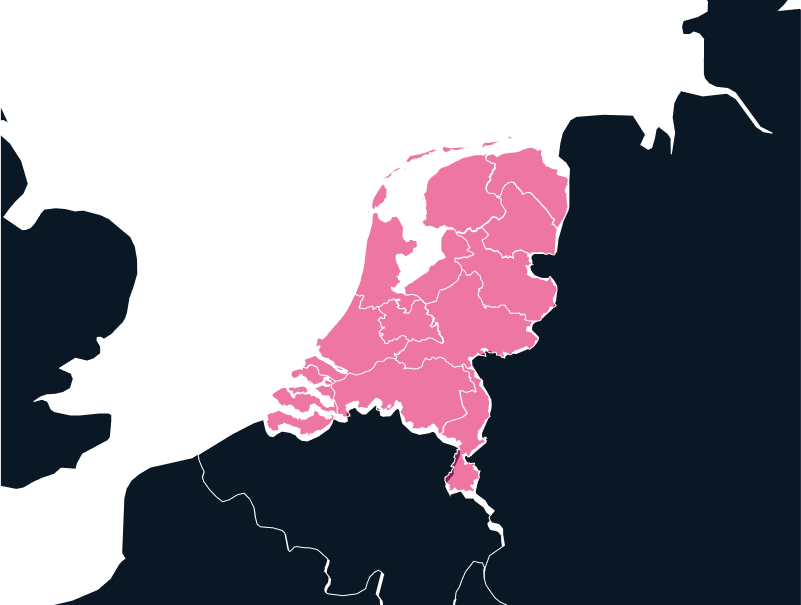
The Netherlands is Europe’s leading technology import gateway, powered by the Port of Rotterdam and the country’s significant semiconductor sector. Many non-EU technology companies use the Netherlands as their first point of entry into the EU, distributing data center hardware, telecommunications equipment, enterprise IT, and semiconductor technologies.
Dutch imports are administered through the Declaration Management System (DMS). The Netherlands is particularly attractive because of its Article 23 VAT deferment scheme. TecEx helps tech importers navigate Dutch trade requirements and unlock VAT efficiencies when applicable.
Trade Blocs and Trade Agreements in the EU
EU Customs Union:
All 27 European Union member states form a single EU Customs Union; they unify under the Union Customs Code (UCC) framework, which establishes uniform customs regulations and shared safety/security standards for goods entering the EU from outside the bloc. This is important as it harmonizes the Common Customs Tariff (CCT), single EU EORI framework, customs procedures, classifications, and common rules for dual-use goods and import compliance.
European Economic Area (EEA):
The EEA extends the EU Single Market to Norway, Iceland, and Liechtenstein, allowing those countries to participate in many EU market rules. This matters for tech trade as it expands market access beyond the EU-27, aligns many product compliance requirements with EU standards, and is important for companies deploying infrastructure across the wider European region.
EU-UK Trade and Cooperation Agreement (TCA):
The post-Brexit trade agreement, TCA, between the EU and the United Kingdom provides preferential trade terms, including zero tariffs and zero quotas for qualifying goods that meet rules-of-origin requirements.
Import and Export Anywhere in the EU
Expanding to the EU?
Don’t let customs delays, VAT complexity, or regulatory hurdles slow your expansion across the EU. TecEx provides you with the compliance support and tailored solutions needed to move technology across the EU with confidence.


