Tariff risk goes beyond higher duties and unexpected costs. It can impact sourcing, customs clearance, delivery timelines, and overall supply chain stability. This guide covers the practical steps businesses can take for tariff risk mitigation through better documentation, logistics planning, and global trade strategy.
Effective tariff risk mitigation requires proactive strategies. As we’ve seen with America’s ongoing trade war, tech companies have reacted to new tariffs by adjusting guidance, issuing margin warnings, implementing price hikes, reconfiguring supply chains, absorbing financial losses, relocating investments, or adding surcharge fees.
While reactive solutions may temporarily mitigate the worst effects of new duties, tech companies can instead harness new opportunities. Businesses can develop an adaptive and proactive tariff risk management strategy for long-term benefits by ensuring accurate documentation, upgrading and engineering their supply chains, and rethinking their global strategy entirely.
What Are the Risks of Tariffs?
Tariff risk mitigation is crucial for the tech industry, as technology importers and exporters typically rely on deeply interconnected supply chains. Each component and material comes from different countries, selected for their cost, quality, and specialization. This exposes tech to tariff shocks from many angles, affecting raw materials, components, and finished products. Common risks include:
Inaccurate Product Classification and Cost Calculations
The HS code classifies a product and determines documentation requirements, compliance obligations, and duty rates. If importers misclassify, errors escalate rapidly.
Sectoral duties require importers to pinpoint the weight, customs value percentage, and country of origin of the tariffed material. Importers must work directly with manufacturers for exact content. This slows imports, while errors cause underpaid duties, penalties, and shipments stuck in customs.
Inaccurate cost calculations from using the wrong HS codes can also mean that a market may not be as feasible as a firm believed.
Sourcing, Logistics, and Supply Chain Disruptions
For OEMs, increased duties can make certain suppliers unreasonably costly to import from. Scrambling for new suppliers can lead to significant delays, and keeping the same suppliers can result in price hikes and customer surcharges.
Similarly, resellers and distributors may no longer be able to serve their main customer base or may have to raise prices.
Tariffs can also apply to returned, repaired, and replacement goods, effectively creating double taxation across RMA flows. This increases landed costs and pushes companies to regionalize reverse logistics to avoid cross-border tariff exposure.
Reshaping the AI Revolution
AI may be software-driven, but the infrastructure powering it is physical. From semiconductors and GPUs to cooling systems, transformers, and server racks, AI data centers rely on globally sourced hardware and raw materials. Tariffs on imported components and electronics can significantly increase the cost of building and scaling AI infrastructure.
If tariffs raise costs, AI firms, hyperscalers, and cloud providers may face delayed deployments, tighter margins, and supply chain disruptions. Higher import costs can also slow innovation by making AI expansion more expensive for startups and emerging players, potentially concentrating the market among only the largest tech companies able to absorb tariff-related costs.
Changes in Demand
Tariffs affect demand for tech products in two ways. First, a price hike could suppress demand in a firm’s main market. Second, firms cannot easily predict demand amid extensive global uncertainty, meaning a strategy like frontloading imports could lead to a surplus of goods, driving up warehousing storage prices with no sign of increased demand in sight.
However, demand could rise elsewhere as it falls in the main market, creating an opportunity for tech companies to find new export markets and expand their global offerings.
Below, we unpack effective and compliant methods for tariff risk mitigation.
Documentation | The Foundation of Seamless Tech Imports
Customs compliance and proper documentation are crucial for tariff risk mitigation.
The Certificate of Origin (COO)
Certificates of Origin are one of the most critical documents in cross-border shipments. They specify the locations where goods were produced, manufactured, or processed. They are used to qualify for trade agreements, prevent origin washing, and determine duties. COOs are crucial when rates are country-specific.
Sometimes, importers doctor the COO to conceal that a shipment was transshipped through a third country, attempting to evade the rate for that country via origin washing. Duty circumvention isn’t something any tech importer wants to be accused of.
The resulting sunk costs, damaged reputation, and losses in profit margins can be detrimental.
Accurate Goods Classification and Valuation
Importing tech anywhere requires knowledge of Harmonized System (HS) codes and goods valuation. Some countries also use a unique classification system, such as the Harmonized Tariff Schedule (HTS) in the USA. Understanding goods classification and valuation empowers importers to legally reduce duty costs through tariff engineering.
When you use the wrong HS/HTS code, or undervalue or overvalue your goods, you risk paying the incorrect duties, customs inspections, and hefty penalties.
Product classifications are infamously complex. Remarkably similar items can have different HS codes. A single digit can be the difference between higher, product-specific tariffs and no duties. One small mistake can mean confiscated goods and delayed projects. Conversely, the correct code can ensure you qualify for trade agreements, benefit from lower duty rates, or secure duty-free access.
In 2024, a company imported solar panels from China into the US but misclassified them as LED lights. The importer faced $1.1 million in import duties and civil penalties for negligent misclassification and unpaid duties.
Importers must remember that the customs value is rarely equal to the price on the Commercial Invoice (CI). As explained by KMPG, additional value arises from packing costs, the selling commissions paid by the purchaser, royalty or license fees paid by the buyer, resale proceeds, and payments to third parties for related services.
Customs valuation is complex, and overvaluing goods can result in overpayment of duties, while undervaluation is considered duty evasion.
The declared customs value of imported goods can be compliantly reduced and optimized for certain locations, such as the US. This commonly requires mechanisms like “First Sale for Export” rather than reselling goods through a middleman, but such mechanisms require supply chain restructuring. Materials and components can also be changed to contain fewer or no tariffed materials.
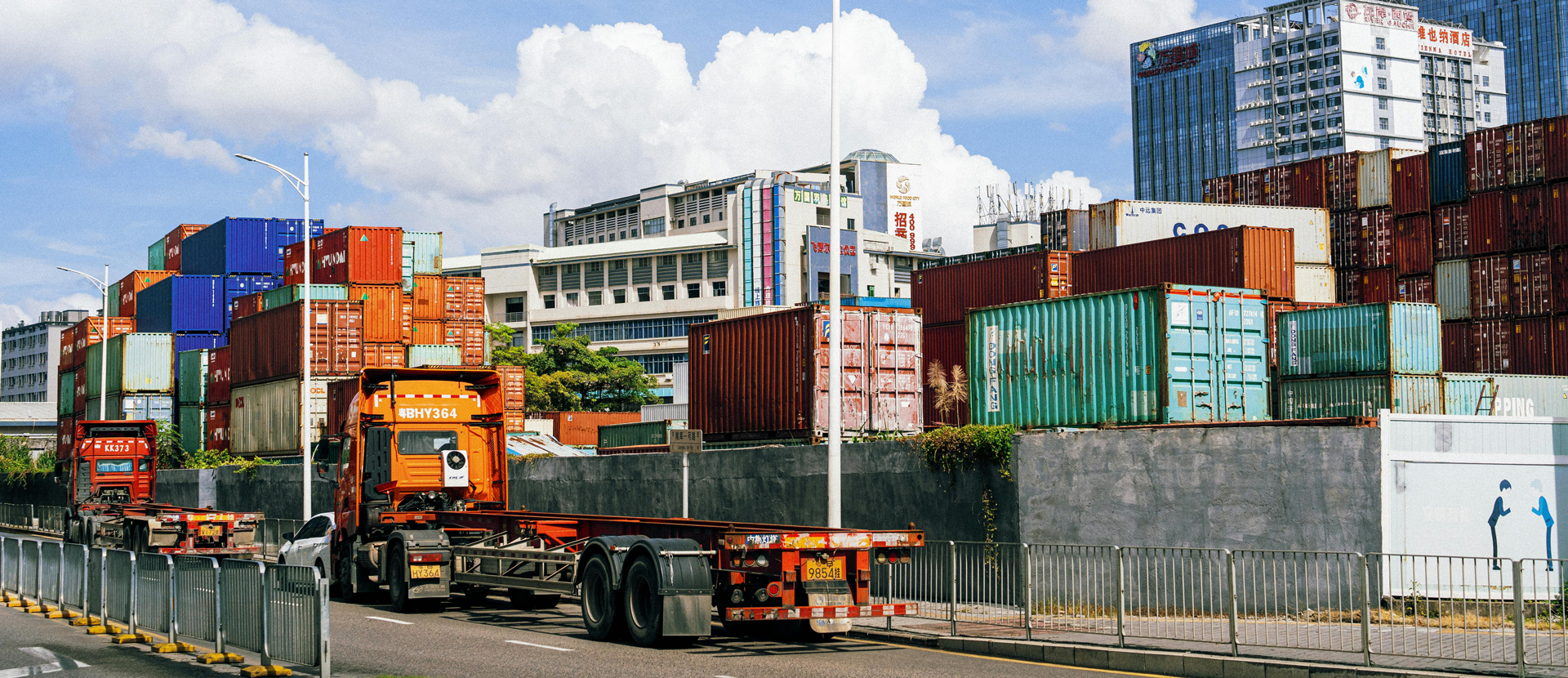
Logistics | Engineer your Supply Chain
Supply chains cannot afford to be reactive when it comes to higher duties. They need to be proactively rethought and transformed for long-term resilience. Diversifying suppliers and entering new export markets can be beneficial for both local and foreign firms seeking better tariff risk management. Local companies can also consider increasing domestic sourcing.
Supply Chain Diversification
Sourcing supplies from a single country is risky. When companies diversify their suppliers across different regions, they can mitigate the impact of higher duties in specific locations.
Sourcing from alternative suppliers in new countries or relocating your manufacturing means that if one country suddenly faces higher tariffs, the higher costs will have a smaller impact on your bottom line.
However, supplier diversification introduces new risks, including inconsistent quality, export regulations, and complex logistics. Businesses diversifying their supply chains should work with an expert like TecEx in global shipping to ensure:
- Compliant exports from unfamiliar locations,
- Visibility over their shipments,
- Their goods are covered with Liability Cover if things go wrong, and
- They have a robust RMA solution or reverse logistics plan in place for repairs, replacements, and maintenance.
Staying Ahead of Changing Duties
As we’ve seen with America’s ongoing trade war, new duties under new policies can change, so partnering with a trade compliance specialist is vital.
At TecEx, our R&D team and our Pre-Compliance Specialists are always on top of the latest duties and import and export regulations. We can ensure your shipments are compliant, efficient, and optimized, no matter where you’re shipping from.
Explore Untapped Export Markets
While supplier diversification is an effective strategy for tariff risk mitigation, buyer diversification is another option to avoid them entirely.
Specific markets may hold unrealized export potential for your tech products. For example, the ITC’s Export Potential Map shows that:
- Africa has unrealized export potential for reception apparatus for color television, telecommunications devices, and transistors.
- Asia has unrealized export potential for electronic integrated circuits (processors and controllers), mobile phones, and telecommunication components.
- Europe has unrealized export potential for teleco gear, mobile phones, and electronic integrated circuits (processors and controllers).
Moreover, new export markets may have Free Trade Agreements awaiting use. These facilitate smoother market access, streamlined import processes, and, in some cases, zero duties on specific products. TecEx can help you navigate new import requirements, leverage existing trade agreements, and seamlessly enter new markets.

Future-Proofing | Global Strategies for Long-Term Resilience
Future-proof strategies, especially continuous scenario planning, are becoming crucial to business continuity.
Leverage Trade Agreements
International trade agreements can benefit global importers and exporters by unlocking new markets.
Supply chain changes, from offshoring to nearshoring, friendshoring, and reshoring, are easier when goods are shipped between countries with trading agreements. Your export location may have existing agreements that can simplify buyer diversification by streamlining imports to untapped markets with preferential treatments or even duty-free access.
Scenario Planning
Scenario planning is critical for tech firms to anticipate and adapt to global trade disruptions. It helps companies maintain or grow their competitive advantage while mitigating tariff risks before they even happen.
Scenario planning is a proactive management approach that involves identifying multiple potential scenarios to understand their possible impacts on your business. It allows companies to prepare for unexpected changes, supply chain disruptions, and other global factors.
The key benefits include supply chain resilience and adaptability, as well as better-informed decisions.
Free Trade Zones and Bonded Warehouses
Free Trade Zones (FTZs) and bonded warehouses offer import and storage locations free from certain tariffs.
FTZs are secure areas protected by government supervision. Bonded warehouses are storage facilities for imports. Both options offer various benefits for tariff risk management:
- Duty Deferment: Duties are often paid only after imports enter the economy, allowing companies to frontload inventory and defer large duty payments until they’re ready to pay.
- Duty Reduction: Sometimes, finished products attract lower duties than components and raw materials. In this case, manufacturers can import into an FTZ, complete the product there, and have the goods enter the economy at a reduced tariff value.
- Duty Elimination: Duties can be eliminated if goods are re-exported from an FTZ or a warehouse and shipped to an international customer base.
Your Partner for Global Tariff Risk Mitigation
If you’re facing America’s evolving duties or dealing with higher duties in another market, we can help you comply with regulations and optimize your tariff risk management strategies. Submit this form and one of our experts will be in touch shortly.
Your Partner for Global Tariff Risk Mitigation
If you’re facing America’s evolving duties or dealing with higher duties in another market, we can help you comply with regulations and optimize your tariff risk management strategies. Submit this form and one of our experts will be in touch shortly.
© Copyright – TecEx. All Rights Reserved. iSynergy Website Design | Privacy Policy | Terms and Conditions | Supplier Code of Conduct
Is Your Deal Stuck In-Country? | New Webinar
Discover how a Buy/Sell solution can help turn complex global deployments into smoother local purchases with local currency payments, VAT/GST efficiency, FX protection, and reduced cross-border transaction risk.